Blockchain and the simplification of legal services for companies in France (II)

Post title

The progressive spread of blockchain technology in France greatly contributes to digital transformation of business. In this second article, Verne Legal continues to shed light on the question of what are its real implications on business law services.

After having discussed in the first article the creation of dematerialized company registers, we evoke below the second application of blockchain technology in business law: the protection of intellectual property (II). Please follow us for consequent articles concerning the dematerialized data room (III) and blockchain as a mean of judicial evidence (IV).

Blockchain in two words: security and immediacy

As we saw in the first article, blockchain is a technology of storage and transmission of information aggreged in “blocks”; that is transparent, secure, and operating without any intermediaries. It enables tracing and time stamping the history of the transactions concerned. 

It is in fact an asset database of recorded transactions grouped by “blocks”, with new “blocks” being added subsequently to the chain. It is secure and accurate; its history can be easily retraced. The ledger is composed of blocks registered in a chronological order, that is shared across a network of multiple sites but of which each participant has his own copy. 

However, why is blockchain so interesting in terms of security? 

The system of sharing allows everyone to verify and authenticate each operation. Thus, the modification is impossible and the chain, and therefore the database, becomes immutable. 

Undoubtedly, blockchain’s inalterability is very interesting for the legal sector and in particular for the protection of intellectual and industrial property.

Blockchain and intellectual property (IP) protection

The use of blockchain to protect IP rights such as patents, copyright and trademarks in a simple and efficient way has been gaining in popularity.  

Indeed, the race for technology transformation gives rise to a very large number of innovation projects that are subject to the requirement of almost instantaneous recording of their development progress.

However, to obtain the copyright, the inventor must be able to demonstrate, firstly, their quality of real creator of the claimed invention, and secondly, their precedence compared to other inventions.

Registration at National Institute of Industrial Property (INPI) of an innovative solution is not possible for all inventions and can turn out to be expensive, especially that usually at this stage the concept has not yet proven its value.  Intermediate means used such as the “Soleau” envelope, filing with a bailiff or a notary are either ineffective or equally costly, or both at the same time.

Therefore, as for the IP, the use of blockchain could revolutionize the means of proof of the authorship of the invention and the date of its creation.

Indeed, the blockchain makes it possible to instantly obtain the date and the time of registration of a creation by anchoring it in the database. Thus, if we attach a “hash” to the text describing the invention or creation, we will then have a certain date that can be opposed to the title of prior personal possession.

It can contribute to automathizing the process of invention’s registration, obtaining secure traceability, and auditing the evolution of an invention since every operation concerning it (stages of creation, transfer, license) have been recorded. 

Anchoring in blockchain allows obtaining a proof of valid invention design (such as the originality or the name of the country where the object produced from the design was firstly marketed), its status and its evolution. For example, with blockchain, it becomes possible to reproduce the traces of the exploitation of digital works, which is impossible today, and, if necessary, to oppose to certain content usages.

A different use of blockchain technology has found its application in the field of patents. Indeed, each copy produced is recorded in a transaction ledger by means of a  unique identification allowing the control of product circulation. This procedure offers among others a possibility of distinguishing authentic products from counterfeit products or even establishing the number of authentic copies in circulation. It will also contribute to fighting the counterfeiting or combatting any other IP rights infringements.

This secure, simplified and inexpensive protection process would also strengthen the position of authors and inventors who today are often helpless in front of the “pillage” of ideas and techniques. Thanks to a platforms offering the anchoring in the blockchain of various elements, a creation born from an idea becomes truly protectable. 

This progress in the blockchain application in the IP, which some people do not hesitate to describe as revolutionary, would also upset the current balance of economic forces. As a matter of fact, intangible assets, that are the only real value of new technology companies, and therefore the only guarantee that start-ups can offer to investors. 

The way that the elements are stored on blockchain reinforces even more the importance of the intangible assets, as the proof thus established will be valid both in the country of origin and everywhere in the world, as will be explained more in detail in the fourth article of Blockchain serie dedicated to blockchain as a mean of judicial evidence (IV). 

In our next article, we will present the third blockchain application in the field of business law: the dematerialization of data rooms (III). 

Ewa Kaluzinska                        Nicolas Renault                         Iga Kurowska
Verne Legal, Partner                 Verne Legal, Lawyer                Verne Legal, Partner

Verne Legal provides a customized legal and tax advisory service to both French and foreign companies. It advises clients in running their business in France, offering strategic assistance enriched by multicultural sensitivity. For more information on the tax law in France, we invite you to download “Doing business in France” e-book and to contact our team at info@20200224verne.fastpages.pl.


Blockchain and the simplification of legal services for companies in France (I)

France is progressing in the process of
digitalization of the business world with the
adoption of, among others, blockchain technology.

Post title

France is progressing in the process of digitalization of the business world with the adoption of, among others, blockchain technology. What are its real implications on the legal corporate services?

In the series of consequently published articles, Verne Legal is going to present four examples of its real application: the dematerialisation of the company registers (I), the protection of intellectual property rights (II), the dematerialization of data rooms (III) and blockchain as a mean of legal evidence (IV).

Blockchain in two words: security and immediacy

Lately it has been very common to hear about blockchain and its benefits. However, what exactly is this emerging technology and why is it so revolutionary in terms of security ?

According to Blockchain France, “Blockchain is a technology for storing and transmitting information, transparent, secure, and operating without a central review body ” [1].

In other words, it is a database which records transactions by grouping them into “blocks”, which traces their history and that is resistant to any modifications. These events, classified in the chronological order, are shared by different users without being copied each time and without the need of any intermediaries. This sharing mechanism allows everyone to verify and authenticate each operation that is added block by block to the chain. Thus, no modification is possible and the chain, and therefore the database, becomes immutable. And all of this, almost instantly in the fractions of a second.

Undoubtedly, blockchain’s inalterability is very interesting for the legal field.

But in practice, how could one apply the blockchain technology to enhance the legal services for SMEs, mid-caps companies or international groups?

In this article we present the first example of possible use of blockchain in the business law industry: dematerialised company registers.

Blockchain and dematerialised company registers

Since 2017, French regulations have gradually been opening up the possibility of dematerialising the legal registers kept by companies of all forms. By registers, we refer to any records linked to the life of the company, such as the registers of securities movements, the registers of various company decisive bodies (such as the Board of Directors) or the official employee register (mandatory in any organization having employees).

Firstly, France has legalised the blockchain registration of issuing and sale of financial securities, such as the company’s shares (not listed companies). Since then, a register of securities movements of a company, until then obligatorily kept in a paper form, could be dematerialized. Thus, thanks to the blockchain technology, the registers could have an incomparably safer digital form.

Such securisation of the registers and the simplification of their maintenance represent a considerable advance for SMEs, especially for start-ups.

As a matter of fact, a registration in the register constitutes a proof of a share ownership in a joint stock company, such as the French “SAS”. Keeping of records is in fact required by the provisions of the French Commercial Code (Code du commerce) [2] and the French Monetary and Financial Code (Code monétaire et financier) [3].  French commercial courts remind on regular basis that the production of a single order for the movement of securities is not sufficient to presume the legitimate ownership of shares [4]. Thus, with the transaction anchored in the blockchain, investments in French companies are perfectly secure.

The dematerialization of company registers through blockchain technology can also reassure smaller investors: no more danger of their investment in the capital of fast-growing start-ups to be drowned, or even to be lost (yes, it does happen!), following yet another urgent fundraising round.

The last stage of the dematerialisation of registers in France was completed in November 2019, with the dematerialisation of the registers of proceedings. Now, most corporate registers and other documents they record can be kept in a digital form.

Therefore, at this point in time, French companies can establish and store the following corporate documents in an electronic form:

  • the minutes of assemblies and the written consultations of partners (or the sole partner when authorized) of a simplified joint stock company (SAS), an anonymous company (SA), a limited liability company (SARL), a company in collective name (SNC), and ordinary limited partnership (SCS) or limited by shares, as well as the register on which they are consigned;
  • the attendance registers of the governing body meetings, for example of the Board of Directors and of the supervisory board of a SA company, of its President etc, as well as the minutes of the deliberations of these bodies and the register in which they are kept;
  • the registers of collective decisions of the partners of civil companies (for example companies owning real estates as SCI) as well as the minutes of the assemblies and written consultations of partners which are kept there, and the mention of the decisions of the partners resulting from an act related to this register.


In addition, the documents uploaded and stored in the dematerialised register may themselves have an electronic form – namely – be authenticated by an electronic signature.   

Furthermore, to fulfill the legal obligations, the electronic signature of documents, when they are drafted or certified, must at least meet the requirements of the advanced electronic signature (unlike the “simple” or “qualified” signature), as provided in the article 26 of the French regulation known as “eIDAS”.

These latest upheavals demonstrate that France is seeking to dematerialise, to an extent of possible, the registers and the documents kept by French companies.

In the next article we will present the second application of the blockchain in the field of business law: Blockchain and the protection of intellectual property rights.

Ewa Kaluzinska                        Nicolas Renault                         Iga Kurowska
Verne Legal, Partner                 Verne Legal, Lawyer                Verne Legal, Partner

Verne Legal provides a customized legal and tax advisory service to both French and foreign companies. It advises clients in running their business in France, offering strategic assistance enriched by multicultural sensitivity. For more information on the tax law in France, we invite you to download “Doing business in France” e-book and to contact our team at info@20200224verne.fastpages.pl.
[1] https://blockchainfrance.net/decouvre-la-blockchain/c- is-what-the-blockchain/
[2] Article L. 228-1 of the French Commercial Code
[3] 
Articles L 211-16 and L 211-17 of the French Monetary and Financial Code
[4] Court of Appeal of Paris, January 11,2018 (n° 16/10056)

Is it urgent to set up a business in France before Brexit ?

Following the legislative election and the victory of the Conservative Party, Brexit has become an inevitable reality. Indeed, Boris Johnson, the new British Prime Minister, announced the ratification of the Withdrawal Agreement Bill by the House of Commons in the nearest future and making sure that the UK leaves the European Union (UE) by January 31, 2020 at the latest. This milestone for Brexit negotiations brings back to the table the unresolved questions concerning the future legal grounds for UK – UE relations.

Following the legislative election and the victory of the Conservative Party, Brexit has become an inevitable reality. Indeed, Boris Johnson, the new British Prime Minister, announced the ratification of the Withdrawal Agreement Bill by the House of Commons in the nearest future and making sure that the UK leaves the European Union (UE) by January 31, 2020 at the latest.

Post title

Following the legislative election and the victory of the Conservative Party, Brexit has become an inevitable reality. Indeed, Boris Johnson, the new British Prime Minister, announced the ratification of the Withdrawal Agreement Bill by the House of Commons in the nearest future and making sure that the UK leaves the European Union (UE) by January 31, 2020 at the latest. This milestone for Brexit negotiations brings back to the table the unresolved questions concerning the future legal grounds for UK – UE relations.

Officially, the trade deal with the EU is promised by the UK politicians by the end of 2020. The feasibility of such promise is however questioned by the UE officials. In the meantime, both British and foreign companies ask themselves what the consequences of Brexit on business exchanges will be.
As a matter of fact, after Brexit, UK will likely lose the benefit, partly or totally, of four fundamental freedoms: the free movement of capital, goods, persons and services. Therefore:

Is it worth keeping a foot in the European Union
by setting up a business in France before Brexit ?

Enforcement of the customs duties and non-customs costs on goods and services

If a hard border UK – EU was to be imposed, companies that once traded freely with the European markets would see their goods exposed to new costs each time they cross the Channel.
These costs could appear as both tariff and non-tariff barriers.
In such case, the UK seller to the EU clients would be certainly subject to customs duties. Additionally, hidden expenditure, in the form of non-tariff taxes, could may appear costly to business. The cost of trading with the UK-based company could also raise as a consequence of introduction of new compliance paperwork and other administrative requirements. Indeed, in a worst-case scenario, the UK would have to comply with the import procedures presently applied by the EU to all third countries.
Despite of the direct impact of the non-tariff measures, a much wider range of additional costs could emerge as companies would have to cope with divergences in technical standards and other regulations existing within the EU system.

Competitivity of the UK goods and services

At the moment, British and other UE companies can import and export within the EU, without the customers having to pay additional taxes. The EU has also free trade agreements with third countries such as Norway, Switzerland, South Africa and South Korea. Once outside the EU, the UK will have to negotiate new trade deals both with the EU and the third countries.

As a result, UK goods and services may become less competitive. This would be a direct consequence of beforementioned tariffs that would have to be added to the base price of products /services. None of those tariffs will be applicable to the remaining 27 countries.

Extension of the shipping schedules

As it is always the case with international shipping, border control and customs can pose a threat to the speed of the goods delivery.

Brexit can bring back the days of red tape and arduous documentation. This goes against the dynamic of international trade relations, which fluidity cannot accept undue stops or checks on the goods traded.

A more complex process of setting up of a business in France to the UK nationals

Up to now, UK nationals benefit from the same conditions as French ones when it comes to establishing an independent business structure in France.

In fact, if a UK citizen wish to start a business activity in France but does not intend to reside there, no specific formality is required compared to a French national. The British businessman is subject to no specific authorizations, except those applying also to the French professionals in regulated professions where some specific qualifications or diplomas are required (i.e. doctors, real estate agents, lawyers).

Equally, if a UK national wishes to reside in France, i.e. stay in France more than three months to incorporate et run his business, he is no subject to obtaining a resident permit or any additional documents. In theory, he has to declare it at the City Hall. Actually, neither company registered office, nor tax or social administration, demand the accomplishment of this formality.

This situation would likely change once UK becomes a third country which is in principle scheduled from January 31, 2020.

From then on, a resident permit may be required from any entrepreneurs wishing to open a branch or a subsidiary in France. Obtaining such a permit would involve following a complex procedure and numerous formalities. The main one would be receiving a long-stay visa which is subject to providing the administration with many documents such as the proof of residency, of income etc. Anyway, it is grated only in the cases provided by law and on the base of legal requirements to comply.

Moreover, to incorporate the most popular companies as French limited liability company (SARL) or a simplified joint-stock company (SAS), the subscribed share capital shall be paid on a particular bank account opened by shareholders on the name of the company. Currently, the process is quite complex for the UE citizen. Therefore, it will be drastically more demanding and rigorous facing a non-Community national once Brexit is effective.

Establishing a company in France as a way to maintain your business attractivity

Having a commercial partner or a direct representative entity close to your French and European clients could be a message attesting your anticipation of the transitional period. This would make you avoid the consequences of the confusion and unclarity resulting from unknown rules applicable to the UK-UE trade relations.

An even safer alternative would be setting up a subsidiary in France.

The choice of such structure would eliminate the risk of additional costs of planning and management of stocks and elongated shipping schedules that have already discussed above.

Also, having a subsidiary on the French territory would make it easier to adapt your products/services to the constantly evolutive EU standards and regulations.

Such an effective presence supported by a legal entity in France, close to your French customers, and in the heart of the European territory, would allow you to better understand their demands and centralize the activity of within the whole EU zone.

For those and other reasons a French subsidiary may give to your company a real competitive edge.

Ewa Kaluzinska                                                                           Nicolas Renault
Verne Legal, Partner                                                                  Verne Legal, Lawyer

Verne Legal provides a customized legal and tax advisory service to both French and foreign companies. It advises clients in running their business in France, offering strategic assistance enriched by multicultural sensitivity. For more information on the tax law in France, we invite you to download “Doing business in France” e-book and to contact our team at info@20200224verne.fastpages.pl.

France commits to improving tax certainty by becoming a member of the ICAP 2.0 Programme

On September 16, 2019, French minister Gérald Darmanin
announced that France will join eighteen other countries
participating in the tax risk assessment program ICAP 2.0

Post title

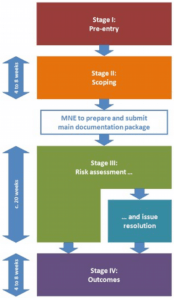
On September 16, 2019, French minister Gérald Darmanin, responsible for developing the budget and country’s transformation policy, announced that France will join eighteen other countries, including Poland, participating in the tax risk assessment program ICAP 2.0, run as part of the OECD cooperation. This program aims among others at combatting more effectively tax avoidance and tax fraud practiced by multinational corporations.


The purpose of France participation is to contribute to the improvement of France’s relations with foreign companies present on the international arena and is yet another proof of France implementing policies favoring the development of foreign trade in this country. The program consists of a series of discussions between large corporations and tax administration about tax stability and transparency. During the March meeting in Santiago, Chile, the OECD Forum no Tax Administration (FTA) decided to move to the second stage of the program – Scoping. The companies participating in the program, such as Shell International BV or Barilla, The, assess the results that have been achieved so far as very positive.


Source: OECD (2019), International Compliance Assurance Program Pilot Handbook 2.0, OECD, Paris.

Since taking up his position in 2017, Minister Darmanin has been intensively working on improving relations between taxpayers and the tax administration. He undertook to implement seven programs, including the creation of an International Tax Office whose aim would be to advise French companies developing their activities abroad on tax systems of other countries. In addition, he plans introducing simplifications for foreign companies operating in France in the tax settlement process, and the systematic publication of instructions to facilitate their understanding of this process.

A lot is being said as well about the intention of France to introduce a special tax concerning IT companies, as it has been already done in Greece, England or Italy. These changes are in line with the work of the European Union on new tax rules for e-commerce companies, which will enter into force in January 2021.

More information on the ICAP 2.0 program: OECD (2019), International Compliance Assurance Program Pilot Handbook 2.0, OECD, Paris. www.oecd.org/www.oecd.org/tax/forum-on-tax-administration/publications-and-products/international- compliance-assurance-program-pilot-handbook-2.0.htm

Iga Kurowska
Verne Legal
i.kurowska@20200224verne.fastpages.pl

Verne Legal provides a customized legal and tax advisory service to both French and foreign companies. It advises clients in running their business in France, offering strategic assistance enriched by multicultural sensitivity. For more information on the tax law in France, we invite you to download “Doing business in France” e-book and to contact our team at info@20200224verne.fastpages.pl.

Right to VAT exemption even in the event of fraudulent acts of the buyer

In the light of European law, the concept of
‘supply of goods’ outside of the EU1, known
as exportation, is objective in nature

Post title

In the light of European law, the concept of ‘supply of goods’ outside of the EU[1], known as exportation, is objective in nature and it applies without regard to the purpose or results of the transactions concerned. Therefore, when the goods leave the territory of the European Union, the company is entitled to a tax rate of 0% instead of the ordinary national rate, as it is the case of domestic deliveries, even if certain formal conditions have not been met.

Such decision was made by the Court of Justice of the European Union (CJEU) on October 17, 2019, in a case brought by the Polish company Unitel (case number C-653/18). In fact, Unitel was required to pay a 23 percent VAT, i.e. the full rate, on the sale of mobiles telephones to a Ukrainian operator. It turned out that the company that actually bought the goods was not the one indicated on the invoice. The Polish tax authority, interpreting this fact as an attempt to fraud on both Polish and Ukrainian sides, concluded that this sale did not meet the requirements of Article 2 (8) of the Goods Tax Act regarding exports. Therefore, it required the payment of full VAT (at a rate of 23%), and thus not qualifying the operation as exportation eligible of VAT exemption. The Polish tax authority also observed that Unitel had drawn up its invoices “based on data submitted by entities whose mandates were not valid or which did not possess genuine business addresses or valid documents providing proof of VAT accounting.” The case was referred to the ECJ by the Polish Supreme Administrative Court in form of a request for a preliminary ruling.

The ECJ ruled in favour of the Polish company, stating that the exporter is not responsible for the buyer’s failure to pay VAT, if he was not aware of that fact. According to the CJEU, it would be disproportionate to hold a taxable person liable for the shortfall in tax caused by fraudulent acts of third parties over which he has no influence whatsoever (in this case, the Ukrainian contractor). However, according to the CJEU, the EU law requires an operator to act in good faith and to take every step which could reasonably be asked of him to satisfy himself that the transaction which he is carrying out does not result in his participation in tax evasion. For this reason, if it were concluded that the taxable person knew or ought to have known that the transaction was part of a fraud and has not taken every step to prevent that fraud, he would have to be refused the right to be exempted from the VAT zero-rate.

By ruling in this direction, the Court questioned the practice of the Polish tax authorities and the case law of national administrative courts. According to the ECJ, the tax authorities cannot automatically demand payment of 23% VAT, which would be equivalent to requalifying the transaction as domestic sales. According to the Court, the mere fact that goods leave the customs territory of the EU qualifies an operation of exportation and as laid down in Article 146(1)(b) of the VAT Directive, makes it eligible for the exemption.

This is an important ruling for all the exporters who need be aware that in order to retain the right to the VAT exemption they have to prove that they have exercised due diligence to ensure that lawfulness of the transaction.

In 2018, the ECJ took the same position in an intra-EU case, concerning the export of goods from Slovenia to Romania. The EU court decided, on October 25, 2018, in the case of Milan Božičevič Ježovnik (case number C-528/17) that “Automatically denying a taxable importer and supplier, without regard to his diligence, the right to the exemption from import VAT in the case of fraud committed by a customer in the context of the subsequent intra-Community supply would have the effect of breaking the link between the import exemption and the exemption of the subsequent intra-Community supply”. Therefore, analogically to the judgment of 17 October 2019, a European taxpayer may be deprived of the right to a refund or deduction of VAT only if he knew or should have known that the transaction which he was conducting was part of tax fraud or tax evasion. Consequently, the obligation of due diligence concerns not only the exporters to third countries, but also those selling products within the European Union.

Iga Kurowska
Verne Legal
i.kurowska@20200224verne.fastpages.pl

[1]Unlike the export of goods from the territory of Poland to the territory of another EU country which is called intra-Community supply of goods and which is also subject to a zero rate of value added tax (VAT) but based on other regulations and slightly different rules.

Verne Legal provides a customized legal and tax advisory service to both French and foreign companies. It advises clients in running their business in France, offering strategic assistance enriched by multicultural sensitivity. For more information on the tax law in France, we invite you to download “Doing business in France” e-book and to contact our team at info@20200224verne.fastpages.pl.