Blockchain and the simplification of legal services for companies in France (II)

Post title

The progressive spread of blockchain technology in France greatly contributes to digital transformation of business. In this second article, Verne Legal continues to shed light on the question of what are its real implications on business law services.

After having discussed in the first article the creation of dematerialized company registers, we evoke below the second application of blockchain technology in business law: the protection of intellectual property (II). Please follow us for consequent articles concerning the dematerialized data room (III) and blockchain as a mean of judicial evidence (IV).

Blockchain in two words: security and immediacy

As we saw in the first article, blockchain is a technology of storage and transmission of information aggreged in “blocks”; that is transparent, secure, and operating without any intermediaries. It enables tracing and time stamping the history of the transactions concerned. 

It is in fact an asset database of recorded transactions grouped by “blocks”, with new “blocks” being added subsequently to the chain. It is secure and accurate; its history can be easily retraced. The ledger is composed of blocks registered in a chronological order, that is shared across a network of multiple sites but of which each participant has his own copy. 

However, why is blockchain so interesting in terms of security? 

The system of sharing allows everyone to verify and authenticate each operation. Thus, the modification is impossible and the chain, and therefore the database, becomes immutable. 

Undoubtedly, blockchain’s inalterability is very interesting for the legal sector and in particular for the protection of intellectual and industrial property.

Blockchain and intellectual property (IP) protection

The use of blockchain to protect IP rights such as patents, copyright and trademarks in a simple and efficient way has been gaining in popularity.  

Indeed, the race for technology transformation gives rise to a very large number of innovation projects that are subject to the requirement of almost instantaneous recording of their development progress.

However, to obtain the copyright, the inventor must be able to demonstrate, firstly, their quality of real creator of the claimed invention, and secondly, their precedence compared to other inventions.

Registration at National Institute of Industrial Property (INPI) of an innovative solution is not possible for all inventions and can turn out to be expensive, especially that usually at this stage the concept has not yet proven its value.  Intermediate means used such as the “Soleau” envelope, filing with a bailiff or a notary are either ineffective or equally costly, or both at the same time.

Therefore, as for the IP, the use of blockchain could revolutionize the means of proof of the authorship of the invention and the date of its creation.

Indeed, the blockchain makes it possible to instantly obtain the date and the time of registration of a creation by anchoring it in the database. Thus, if we attach a “hash” to the text describing the invention or creation, we will then have a certain date that can be opposed to the title of prior personal possession.

It can contribute to automathizing the process of invention’s registration, obtaining secure traceability, and auditing the evolution of an invention since every operation concerning it (stages of creation, transfer, license) have been recorded. 

Anchoring in blockchain allows obtaining a proof of valid invention design (such as the originality or the name of the country where the object produced from the design was firstly marketed), its status and its evolution. For example, with blockchain, it becomes possible to reproduce the traces of the exploitation of digital works, which is impossible today, and, if necessary, to oppose to certain content usages.

A different use of blockchain technology has found its application in the field of patents. Indeed, each copy produced is recorded in a transaction ledger by means of a  unique identification allowing the control of product circulation. This procedure offers among others a possibility of distinguishing authentic products from counterfeit products or even establishing the number of authentic copies in circulation. It will also contribute to fighting the counterfeiting or combatting any other IP rights infringements.

This secure, simplified and inexpensive protection process would also strengthen the position of authors and inventors who today are often helpless in front of the “pillage” of ideas and techniques. Thanks to a platforms offering the anchoring in the blockchain of various elements, a creation born from an idea becomes truly protectable. 

This progress in the blockchain application in the IP, which some people do not hesitate to describe as revolutionary, would also upset the current balance of economic forces. As a matter of fact, intangible assets, that are the only real value of new technology companies, and therefore the only guarantee that start-ups can offer to investors. 

The way that the elements are stored on blockchain reinforces even more the importance of the intangible assets, as the proof thus established will be valid both in the country of origin and everywhere in the world, as will be explained more in detail in the fourth article of Blockchain serie dedicated to blockchain as a mean of judicial evidence (IV). 

In our next article, we will present the third blockchain application in the field of business law: the dematerialization of data rooms (III). 

Ewa Kaluzinska                        Nicolas Renault                         Iga Kurowska
Verne Legal, Partner                 Verne Legal, Lawyer                Verne Legal, Partner

Verne Legal provides a customized legal and tax advisory service to both French and foreign companies. It advises clients in running their business in France, offering strategic assistance enriched by multicultural sensitivity. For more information on the tax law in France, we invite you to download “Doing business in France” e-book and to contact our team at info@20200224verne.fastpages.pl.

Blockchain and the simplification of legal services for companies in France (I)

France is progressing in the process of
digitalization of the business world with the
adoption of, among others, blockchain technology.

Post title

France is progressing in the process of digitalization of the business world with the adoption of, among others, blockchain technology. What are its real implications on the legal corporate services?

In the series of consequently published articles, Verne Legal is going to present four examples of its real application: the dematerialisation of the company registers (I), the protection of intellectual property rights (II), the dematerialization of data rooms (III) and blockchain as a mean of legal evidence (IV).

Blockchain in two words: security and immediacy

Lately it has been very common to hear about blockchain and its benefits. However, what exactly is this emerging technology and why is it so revolutionary in terms of security ?

According to Blockchain France, “Blockchain is a technology for storing and transmitting information, transparent, secure, and operating without a central review body ” [1].

In other words, it is a database which records transactions by grouping them into “blocks”, which traces their history and that is resistant to any modifications. These events, classified in the chronological order, are shared by different users without being copied each time and without the need of any intermediaries. This sharing mechanism allows everyone to verify and authenticate each operation that is added block by block to the chain. Thus, no modification is possible and the chain, and therefore the database, becomes immutable. And all of this, almost instantly in the fractions of a second.

Undoubtedly, blockchain’s inalterability is very interesting for the legal field.

But in practice, how could one apply the blockchain technology to enhance the legal services for SMEs, mid-caps companies or international groups?

In this article we present the first example of possible use of blockchain in the business law industry: dematerialised company registers.

Blockchain and dematerialised company registers

Since 2017, French regulations have gradually been opening up the possibility of dematerialising the legal registers kept by companies of all forms. By registers, we refer to any records linked to the life of the company, such as the registers of securities movements, the registers of various company decisive bodies (such as the Board of Directors) or the official employee register (mandatory in any organization having employees).

Firstly, France has legalised the blockchain registration of issuing and sale of financial securities, such as the company’s shares (not listed companies). Since then, a register of securities movements of a company, until then obligatorily kept in a paper form, could be dematerialized. Thus, thanks to the blockchain technology, the registers could have an incomparably safer digital form.

Such securisation of the registers and the simplification of their maintenance represent a considerable advance for SMEs, especially for start-ups.

As a matter of fact, a registration in the register constitutes a proof of a share ownership in a joint stock company, such as the French “SAS”. Keeping of records is in fact required by the provisions of the French Commercial Code (Code du commerce) [2] and the French Monetary and Financial Code (Code monétaire et financier) [3].  French commercial courts remind on regular basis that the production of a single order for the movement of securities is not sufficient to presume the legitimate ownership of shares [4]. Thus, with the transaction anchored in the blockchain, investments in French companies are perfectly secure.

The dematerialization of company registers through blockchain technology can also reassure smaller investors: no more danger of their investment in the capital of fast-growing start-ups to be drowned, or even to be lost (yes, it does happen!), following yet another urgent fundraising round.

The last stage of the dematerialisation of registers in France was completed in November 2019, with the dematerialisation of the registers of proceedings. Now, most corporate registers and other documents they record can be kept in a digital form.

Therefore, at this point in time, French companies can establish and store the following corporate documents in an electronic form:

  • the minutes of assemblies and the written consultations of partners (or the sole partner when authorized) of a simplified joint stock company (SAS), an anonymous company (SA), a limited liability company (SARL), a company in collective name (SNC), and ordinary limited partnership (SCS) or limited by shares, as well as the register on which they are consigned;
  • the attendance registers of the governing body meetings, for example of the Board of Directors and of the supervisory board of a SA company, of its President etc, as well as the minutes of the deliberations of these bodies and the register in which they are kept;
  • the registers of collective decisions of the partners of civil companies (for example companies owning real estates as SCI) as well as the minutes of the assemblies and written consultations of partners which are kept there, and the mention of the decisions of the partners resulting from an act related to this register.


In addition, the documents uploaded and stored in the dematerialised register may themselves have an electronic form – namely – be authenticated by an electronic signature.   

Furthermore, to fulfill the legal obligations, the electronic signature of documents, when they are drafted or certified, must at least meet the requirements of the advanced electronic signature (unlike the “simple” or “qualified” signature), as provided in the article 26 of the French regulation known as “eIDAS”.

These latest upheavals demonstrate that France is seeking to dematerialise, to an extent of possible, the registers and the documents kept by French companies.

In the next article we will present the second application of the blockchain in the field of business law: Blockchain and the protection of intellectual property rights.

Ewa Kaluzinska                        Nicolas Renault                         Iga Kurowska
Verne Legal, Partner                 Verne Legal, Lawyer                Verne Legal, Partner

Verne Legal provides a customized legal and tax advisory service to both French and foreign companies. It advises clients in running their business in France, offering strategic assistance enriched by multicultural sensitivity. For more information on the tax law in France, we invite you to download “Doing business in France” e-book and to contact our team at info@20200224verne.fastpages.pl.

[1] https://blockchainfrance.net/decouvre-la-blockchain/c- is-what-the-blockchain/
[2] Article L. 228-1 of the French Commercial Code
[3] 
Articles L 211-16 and L 211-17 of the French Monetary and Financial Code
[4] Court of Appeal of Paris, January 11,2018 (n° 16/10056)

Is it urgent to set up a business in France before Brexit ?

Following the legislative election and the victory of the Conservative Party, Brexit has become an inevitable reality. Indeed, Boris Johnson, the new British Prime Minister, announced the ratification of the Withdrawal Agreement Bill by the House of Commons in the nearest future and making sure that the UK leaves the European Union (UE) by January 31, 2020 at the latest. This milestone for Brexit negotiations brings back to the table the unresolved questions concerning the future legal grounds for UK – UE relations.

Following the legislative election and the victory of the Conservative Party, Brexit has become an inevitable reality. Indeed, Boris Johnson, the new British Prime Minister, announced the ratification of the Withdrawal Agreement Bill by the House of Commons in the nearest future and making sure that the UK leaves the European Union (UE) by January 31, 2020 at the latest.

Post title

Following the legislative election and the victory of the Conservative Party, Brexit has become an inevitable reality. Indeed, Boris Johnson, the new British Prime Minister, announced the ratification of the Withdrawal Agreement Bill by the House of Commons in the nearest future and making sure that the UK leaves the European Union (UE) by January 31, 2020 at the latest. This milestone for Brexit negotiations brings back to the table the unresolved questions concerning the future legal grounds for UK – UE relations.

Officially, the trade deal with the EU is promised by the UK politicians by the end of 2020. The feasibility of such promise is however questioned by the UE officials. In the meantime, both British and foreign companies ask themselves what the consequences of Brexit on business exchanges will be.
As a matter of fact, after Brexit, UK will likely lose the benefit, partly or totally, of four fundamental freedoms: the free movement of capital, goods, persons and services. Therefore:

Is it worth keeping a foot in the European Union
by setting up a business in France before Brexit ?

Enforcement of the customs duties and non-customs costs on goods and services

If a hard border UK – EU was to be imposed, companies that once traded freely with the European markets would see their goods exposed to new costs each time they cross the Channel.
These costs could appear as both tariff and non-tariff barriers.
In such case, the UK seller to the EU clients would be certainly subject to customs duties. Additionally, hidden expenditure, in the form of non-tariff taxes, could may appear costly to business. The cost of trading with the UK-based company could also raise as a consequence of introduction of new compliance paperwork and other administrative requirements. Indeed, in a worst-case scenario, the UK would have to comply with the import procedures presently applied by the EU to all third countries.
Despite of the direct impact of the non-tariff measures, a much wider range of additional costs could emerge as companies would have to cope with divergences in technical standards and other regulations existing within the EU system.

Competitivity of the UK goods and services

At the moment, British and other UE companies can import and export within the EU, without the customers having to pay additional taxes. The EU has also free trade agreements with third countries such as Norway, Switzerland, South Africa and South Korea. Once outside the EU, the UK will have to negotiate new trade deals both with the EU and the third countries.

As a result, UK goods and services may become less competitive. This would be a direct consequence of beforementioned tariffs that would have to be added to the base price of products /services. None of those tariffs will be applicable to the remaining 27 countries.

Extension of the shipping schedules

As it is always the case with international shipping, border control and customs can pose a threat to the speed of the goods delivery.

Brexit can bring back the days of red tape and arduous documentation. This goes against the dynamic of international trade relations, which fluidity cannot accept undue stops or checks on the goods traded.

A more complex process of setting up of a business in France to the UK nationals

Up to now, UK nationals benefit from the same conditions as French ones when it comes to establishing an independent business structure in France.

In fact, if a UK citizen wish to start a business activity in France but does not intend to reside there, no specific formality is required compared to a French national. The British businessman is subject to no specific authorizations, except those applying also to the French professionals in regulated professions where some specific qualifications or diplomas are required (i.e. doctors, real estate agents, lawyers).

Equally, if a UK national wishes to reside in France, i.e. stay in France more than three months to incorporate et run his business, he is no subject to obtaining a resident permit or any additional documents. In theory, he has to declare it at the City Hall. Actually, neither company registered office, nor tax or social administration, demand the accomplishment of this formality.

This situation would likely change once UK becomes a third country which is in principle scheduled from January 31, 2020.

From then on, a resident permit may be required from any entrepreneurs wishing to open a branch or a subsidiary in France. Obtaining such a permit would involve following a complex procedure and numerous formalities. The main one would be receiving a long-stay visa which is subject to providing the administration with many documents such as the proof of residency, of income etc. Anyway, it is grated only in the cases provided by law and on the base of legal requirements to comply.

Moreover, to incorporate the most popular companies as French limited liability company (SARL) or a simplified joint-stock company (SAS), the subscribed share capital shall be paid on a particular bank account opened by shareholders on the name of the company. Currently, the process is quite complex for the UE citizen. Therefore, it will be drastically more demanding and rigorous facing a non-Community national once Brexit is effective.

Establishing a company in France as a way to maintain your business attractivity

Having a commercial partner or a direct representative entity close to your French and European clients could be a message attesting your anticipation of the transitional period. This would make you avoid the consequences of the confusion and unclarity resulting from unknown rules applicable to the UK-UE trade relations.

An even safer alternative would be setting up a subsidiary in France.

The choice of such structure would eliminate the risk of additional costs of planning and management of stocks and elongated shipping schedules that have already discussed above.

Also, having a subsidiary on the French territory would make it easier to adapt your products/services to the constantly evolutive EU standards and regulations.

Such an effective presence supported by a legal entity in France, close to your French customers, and in the heart of the European territory, would allow you to better understand their demands and centralize the activity of within the whole EU zone.

For those and other reasons a French subsidiary may give to your company a real competitive edge.

Ewa Kaluzinska                                                                           Nicolas Renault
Verne Legal, Partner                                                                  Verne Legal, Lawyer

Verne Legal provides a customized legal and tax advisory service to both French and foreign companies. It advises clients in running their business in France, offering strategic assistance enriched by multicultural sensitivity. For more information on the tax law in France, we invite you to download “Doing business in France” e-book and to contact our team at info@20200224verne.fastpages.pl.

PRIVACY AND COOKIES POLICY

PRIVACY AND COOKIES POLICY

1. GENERAL INFORMATION

According to the requirements of the General Data Protection Regulation (GDPR) that entered into force on May 25, 2018, Verne Legal SARL, with its registered office at 418, rue du Mas de Verchant – BP 12 – 34935 Montpellier Cedex 9, in France (hereinafter “VL”) would like to provide some details concerning the personal data processing by VL.

Our goal is to provide a complete, clear and transparent information to each Website visitor (hereinafter the “User”) on how he/she can assure the effective protection of his/her private sphere of life. Therefore, VL shares all information regarding this protection in this Privacy and Cookies Policy. In all matters concerning the processing of personal data and cookies, please contact us at info@20200224verne.fastpages.pl.

2. COLLECTED INFORMATION

When using the Website, User data is automatically collected. These data include IP address, domain name, browser type and version, operating system and language. These data can be collected by cookies, Google Analytics and the Web Beacon system, and can be saved in server logs.

The personal data provided by the Users on the Website is voluntary. They are defined as any information relating to an identified or identifiable natural person who can be identified, directly or indirectly, in particular by reference to an identifier such as a name, an identification number, location data, an online identifier or to one or more factors specific to the physical, physiological, genetic, mental, economic, cultural or social identity of that natural person.

3. DATA CONTROLLER

Verne Legal law firm acts as the data controller.
In order to contact the controller, please send an e-mail to info@20200224verne.fastpages.pl or contact us in writing, sending your request/question to the following address:
Ewa Kaluzinska
Verne Legal
418, rue du Mas de Verchant – BP 12 – 34935
Montpellier Cedex 9, France
Email: info@20200224verne.fastpages.pl
Tel: +48 22 427 87 10

4. PERSONAL DATA
4.1. Data processing carried out by VL

As a result of browsing the Website, the Administrator collects and processes personal data in accordance with the relevant provisions, including in particular the GDPR (Regulation (EU) 2016/679 of the European Parliament and of the Council of 27 April 2016 on the protection of natural persons with regard to the processing of personal data and on the free movement of such data, and repealing Directive 95 /46/EC), and the rules for their processing contained therein.

The Controller ensures the transparency of data processing, in particular, by always informing the User about the processing of data at the time of data collection, its purpose and the legal grounds. The Controller ensures that the data is collected only to the extent necessary for the indicated purpose and only for as long as the processing is necessary.
When processing of Users’ data, the Administrator ensures their security and confidentiality. It guarantees the access to data to the Users concerned. If, despite the security measures, there has been a violation of personal data protection (e.g. “leakage” of data or their loss), the Controller shall inform the Users about such event in a manner conform with the provisions.

As part of its activities, VL collects and processes personal data based on:
Art. 6. 1 f) GDPR – processing is necessary for the purposes of the legitimate interests pursued by the controller (namely VL): to provide services to their clients, for marketing of VL services, including to inform about events organized by VL or in which VL participates and about other VL activities, as well as for analytical, statistical purposes, as well as to ensure 20200224verne.fastpages.pl website cybersecurity;
Art. 6. 1 c) and art. 6.1 a) GDPR – to recruit people interested in working or cooperating with VL;
Art. 6.1 c) GDPR– processing is necessary for compliance with a legal obligation to which the controller is subject;

Therefore, the User’s data are processed mainly, but not exclusively, to present LV services, handle the queries from the contact form, send an e-book and a company newsletter, as well as in case of recruitment procedures.

4.2. Data recipients

The recipients of User’s personal data may be appropriately authorized employees and associates of VL, as well as, depending on the situation, external processing entities, including in particular the IT suppliers (hosting). They provide us with a hosting service and diverse systems of online marketing, both for sending emails and analysing website traffic. The list of suppliers is given in art. 2 of this Privacy and Cookies Policy.
We use suppliers who do not act solely on our demand and will determine the purposes and ways of using the User’s personal data themselves. They provide advertising campaign services for us. Our suppliers are based mainly in Poland and other countries of the European Economic Area (EEA). We make sure that our suppliers guarantee a high level of personal data protection.
Also, VL may disclose Users’ Data, if requested, to an authorized state authority.

4.3. Storage and processing duration

The duration of data processing and storage depends on the type of service provided and the purpose of the processing. The data processing period may also result from legal provisions. In the case of data processing on the basis of the Administrator’s legitimate interest – e.g. for security reasons – the data are processed for a period of time enabling the implementation of this interest or to enable an effective objection to data processing. If the processing is based on consent, the data is processed until it is withdrawn. When the basis for processing is necessary to conclude and execute the contract obligations, the data is processed until its termination.
The data processing period may be extended if it is necessary to establish and assert claims or queries or elaborate a defence against them. After that time, it will only be processed in the event and to the extent required by law. After the storage duration, backup copies are permanently destroyed or anonymised.

4.4. Rights of persons affected

The User is any natural person visiting the website www.20200224verne.fastpages.pl, whose personal data is collected by the Website and processed by the Controller.
The User is also a person using VL IT applications (chatbox), a person visiting our social media and using social media plugins and tools, as well as an individual conducting e-mail correspondence with VL or applying for a job with VL.
According to recital 39 and art. 13, all natural persons should be made aware of risks, rules, safeguards and rights in relation to the processing of personal data and how to exercise their rights in relation to such processing. Namely, VL enables Users the exercise the following rights:

    • right to be informed about the processing of personal data – in response to the request from the User, the Controller provides information about data processing, including but not limited to the purposes and legal grounds for processing, the scope of data stored, entities to which it is disclosed, and the planned date of deletion of data;
    • right to obtain a copy of User’s data – the Controller provides a copy of the processed data regarding the person submitting the request;
    • right to rectification – the Controller is obliged to remove or correct any inaccuracies or errors of personal data processed and supplement them if they are incomplete;
    • right to deletion – according to art. 17 GDPR, the User can request that the Controller deletes the data, provided the legal requirements have been met. This can be the case if the data are no longer required for the purposes for which they were acquired or otherwise processed.
    • right to restriction of processing – in the event of such request, and provided the legal requirements have been met, the Controller ceases to perform operations on personal data concerned by the restriction and their storage, in accordance with accepted retention rules or until the reasons for limiting data processing cease to exist (e.g. a decision of the supervisory authority allowing further processing of data will be issued);
    • right to data transferability – at User’s request, VL can transfer your data – where technically possible – to another responsible entity. However, this right only applies if the data processing is based on User’s consent or is required to fulfil a contract. It is also possible to request that the data be sent to another entity – however, provided that there are technical possibilities in this regard both on the part of the Controller and that other entity;
    • right to objection to the processing of data for marketing purposes – the User may, at any time, object to the processing of his/her personal data for marketing purposes, without the need to justify such a demand;
    • right to objection to other purposes of data processing – the User may, at any time, object to the processing of personal data based on VL legitimate interest or the User’s consent (e.g. for analytical or statistical purposes or for reasons related to the protection of property); such request must be motivated by the User. In this case, VL will no longer process your data. The latter does not apply if VL is able to prove there are compelling, defensible reasons for the processing that outweigh your interests or we require your data to assert, exercise or defend against legal claims.
    • right to withdraw consent – if the data are processed on the basis of expressed consent, the User has the right to withdraw it at any time. However, it does not affect the lawfulness of the processing carried out before the consent is withdrawn.;
    • right to lodge a complaint – if processing of personal data violates the provisions of the GDPR or other provisions regarding the personal data protection, the User may lodge a complaint with the Commission nationale de l’informatique et des libertés “CNIL” (CNIL, 3 Place de Fontenoy, 75007 Paris).

In order to exercise the above rights, please contact the data Controller using the contact details indicated above. The abovementioned requests can by sent by e-mail to info@20200224verne.fastpages.pl, or by post to the address of Verne Legal provided in point nr.3.

4.5. Recruiting

As part of the recruitment processes, the Controller expects to be provided personal data (e.g. in a CV, CV or cover letter) only to the extent required by the applicable labour law. Therefore, no additional information should be provided. If the submitted applications contain additional data, they will not be used or included in the recruitment process.

5. COOKIES

Like most websites, Verne Legal uses cookies to help visitors use the website and to create anonymous statistics.

5.1. Definition

The concept of cookies should be understood in a broad sense. It includes IT data, in particular all markers used and / or read while browsing the Website, regardless of the type of device used (e.g. computer or smartphone).

Cookies make the website environment more suited to the needs of the User by:

      • Keeping preferences, so you don’t have to enter them every time you visit the Website,
      • Assessment of the Website usage and related needs, and then adapting the Website to the User’s expectations.

Our cookies are designed to improve the functioning of the Website from the User’s perspective.

They enable managing and / or deleting selected files. However, we would like to draw Users’ attention to the fact that blocking or limiting the use of cookies may affect some of the functionalities of the Websites and prevent the User from fully experiencing the services offered by the Website.

Cookies will not be used to collect personal data on the user’s hard drive, read e-mail addresses, or to obtain private information.

5.2. Cookie Settings

The User has a possibility to manage VL Website Cookies settings. He/she can disable them or limit them at any time, by changing the Web browser settings. The use of the Cookie settings varies on the browser. More information on how to change the cookie settings can be found in the browser’s help menu.

5.3. Use of cookies

This VL site uses cookies in many locations. Due to the lack of functions such as creating an account, a log in, commenting or shopping via WooCommerce, the Website does not use WordPress cookies.
However, the Website automatically collects User data and uses cookies for technical, marketing and analytical purposes. More precisely, this applies to cookies essential for the Site and acceptance of its use (so-called technical cookies), functionality cookies, statistics cookies, as well as marketing cookies (social media cookies included).

Please find below the list of cookies collected, as well as details concerning the reasons for their using and the time of their storage.

Technical cookies (cookies essential for the site)

Cookie name Purpose Expiration
eZSESSID This cookie is used by our content management system and is added when you visit the Site. It is essential for the functioning of the Website. It enables the user to navigate on the website and use Site functionalities. Session

Remembering information about VL Cookies Policy

During the User’s first visit, a Cookies notification message will appear, providing the User with the basic information on the use of cookies and asking for the acceptance. By clicking the “Accept” button, cookies will be saved, which will enable the User’s computer to receive the confirmation of reading the Cookie policy, to remember it and thus not to display it during the next visit.

Cookie name Purpose Expiration
VernelegalAcceptCookies It stores cookies to inform us that the User have seen and accepted our Cookie notification message. 12 months

Estimating and assessing the use of the website
We use Google Analytics to collect information about the use of the website and to better understand Users’ expectations. It enables us to constantly improve our Website.
Google Analytics stores information about websites visited by the User, the amount of time spent on them, etc. We do not collect or store any personal information, such as name or address, so this cookie cannot be used to identify you as a User. We do not allow Google to use or share the data of people who viewed our site to third parties.
You can opt out of Google Analytics cookies by visiting this page on Google.

Cookie name Purpose Expiration
_utma This randomly generated number is used to determine the number of unique Users on our Site. 13 months
_utmb This randomly generated number along with _utmc is used to calculate the average amount of time Users spend on our site. 30 minutes
_utmc Randomly generated number used (with _utmb) to calculate when you close your browser. Session
_utmz Randomly generated number and information about how the User accessed the Website (for example, via a direct link, by searching or paid search). 6 months
_jsuid This “cookie” stores a random number that is generated when you first visit the site. Its purpose is to identify new website Users. 13 months
_eventqueue This “cookie” stores a mapping of mouse movements that can be registered on our servers only when the current page is turned off. These offsets can not be processed until the next page is loaded. 1 hour
heatmaps_g2g_100626449 Thanks to this cookie we can order Google to record clicks on the page on the basis of which the heat map is created (record of website locations that the user watches and its duration). 1 hour
_first_pageview Session cookies set during the first preview of the Site at each visit. Its purpose is to check that certain parts of the code turn on at the first view of the page, speeding up its operation and improving efficiency. 10 minutes
_referrer_og This cookie stores user external credentials. 90 days

Cookies used for marketing purposes and on social networks
Hotjar

Cookie name Purpose Expiration
hjDonePolls Hotjar uses cookies and other technologies to collect data about the behaviour of Users and their devices (in particular the device’s IP address (captured and stored only in anonymous form), device screen size, device type (unique device identifiers), browser information, geographical location (country only), preferred language (used to display our website), click maps or other static charts, but also session recordings. Hotjar stores this information in a pseudonymous User profile. Neither Hotjar nor VL will ever use this information to identify individual users or to match them with further User’s data: https://www.hotjar.com/legal/policies/privacy 12 months
hjIncludeInSample Session

Double click

Cookie name Purpose Expiration
DSID – Double Click We use tools for advertising and re-marketing purposes. For this purpose, Google cookies are used for DoubleClick services (DoubleClick Campaign Manager, Doubleclick Bid Manager, DoubleClick Search, DoubleClick Floodlight). External suppliers install the appropriate code or pixel to download information about the User’s activity on the Services and then, on this basis, the User who visited our Services displays our ads on other websites belonging to the advertising network of our external suppliers (so-called remarketing), collects information about the campaig 15 days
IDE – Double Click 380 days

Social media

Cookie name Purpose Expiration
leo_auth_token These LinkedIn cookies are activated by the LinkedIn share button. They enable tracking of websites visited by the User. For more information, visit the LinkedIn page: https://www.linkedin.com/legal/privacy-policy 1 hour
L1e
metrics_token These are Twitter cookies. They are used by Twitter to provide embedded content that is displayed in the site. More information: https://help.twitter.com/en/rules-and-policies/twitter-cookies 1 hour
tfw_exp
6. HYPERLINKS TO OTHER WEBSITES

This Privacy and Cookies Policy applies exclusively to the VL Website.
As for other hyperlinks referring the User to other websites that are posted on the VL Website, VL disclaims all responsibility for the privacy practices of those websites. After entering the websites of other entities, we recommend that you read the Privacy Policy and Cookie Policy set out there.

7. CHANGES TO THE VERNE LEGAL PRIVACY AND COOKIES POLICY

From time to time, VL will update this Privacy and Cookie Policy to reflect changes in our practices and services. If we introduce changes to the content of this Privacy and Cookies Policy, we will change the “last updated date” at the bottom of the document. We recommend checking the content of this page on regular basis to be aware of the changes in the content of this document.

8. FINAL PROVISIONS

his Privacy and Cookies policy shall be governed by and construed in accordance with French law, in consideration with specific ethical and deontological rules. Any disputes that may arise from the relations covered by this policy are to be held, in case of inability to encounter an amiable solution, before the French Court territorially competent for the registered office of VERNE LEGAL.

Updated on November 8th, 2019
***

GENERAL TERMS OF USE THE “20200224verne.fastpages.pl” WEBSITE

GENERAL TERMS OF USE
THE “20200224verne.fastpages.pl” WEBSITE

Article 1: Subject

These General Terms of Use apply to all the content published by the 20200224verne.fastpages.pl website (hereinafter the “20200224verne.fastpages.pl website” or “Site”), such as materials or articles.
By using this Site, the visitor (hereinafter “the User”) is agreeing to be bound by the following General Terms of Use.
These Terms of Use can be modified or updated at any time. Therefore, the User is encouraged to visit the Site and regularly read the conditions.

Article 2: Legal Disclaimer
  • This Site was published by:
    Verne Legal SARL company, with a share capital of 3,000 €
    SIRET Number: 84846592800010, RCS Montpellier n ° 848465928
    Address: 418, rue du Mas de Verchant – BP 12 – 34935 Montpellier Cedex 9, France (hereinafter “VERNE LEGAL”).
  • VERNE LEGAL is a law firm registered upon the Bar Association of Montpellier, France.
    Attorney at Law (fr. avocat) Ewa Kaluzinska is also on the list of foreign lawyers of the Bar Association of Warsaw, Poland.
  • Publication director: Ewa Kaluzinska
  • Contact: info@20200224verne.fastpages.pl
    Phone numbers: +33 430 050 90
    +48 22 427 87 10
  • Hosting
    PLUM – Web Solutions Sp. z o.o., z siedzibą w Warszawie, przy ul. Wiśniowej 48/16, 02-520 Warszawa zarejestrowaną w Krajowym Rejestrze Sądowym prowadzonym przez Sąd Rejonowy dla m. st. Warszawy w Warszawie, XIII Wydział Gospodarczy Krajowego Rejestru Sądowego pod numerem KRS: 0000373171 posiadającą REGON: 142729640;
  • Service provider of direct and permanent data storage:
    Zennox sp z oo, Dąbrowskiego 7, 42200 Częstochowa, Poland
    KRS n ° 0000414281 DISTRICT COURT IN CZĘSTOCHOWA, XVII ECONOMIC DEPARTMENT OF THE NATIONAL COURT REGISTER;
    “REGON” number 242888558.
Article 3: Access to the website

The 20200224verne.fastpages.pl Website provides access to information on legal services provided by the VERNE LEGAL law firm, events organized by VERNE LEGAL, and information regarding VERNE LEGAL.

It also contains general information and law review, in particular in the field of commercial law, tax law and IT law.

The Site offers an ebook “Doing Business in France”, available upon request, and an option to contact VERNE LEGAL vía the contact form.

The 20200224verne.fastpages.pl Website also provides interactive tools of communication between the Website Users and the lawyers, as well as the legal ChatBot (conversation robot) that answers simple questions.

The Information and materials published on the Website shall under no circumstances be considered as legal opinions or consultations. The use of publications on the Site cannot replace individual consultation with a lawyer. Only an individual consultation can provide a solution responding to Users’ situation, as it depends on their needs and personal situation.

All information published on the Website is provided for information purposes only and is subject to change at any time without prior notice to Users.

The Site is available free of charge no matter the place, for every User with an Internet access. All costs incurred by the User in order to access the service (hardware, software, Internet connection, etc.) are covered solely by the User.

For technical or other reasons, access to the Site may be interrupted or suspended by the publisher without notice or justification.

The Site uses the WordPress CMS system and technologies such as MySQL, PHP, Javascript, CSS and HTML. By all possible means it ensure the best quality of the service. Nevertheless, VERNE LEGAL is under no obligation to achieve results.

VERNE LEGAL is not liable for any material damage related to the use of the 20200224verne.fastpages.pl Website. In addition, the Website User undertakes to access the Website using the latest virus-free devices and using an updated, modern Web browser.

Any event caused by force majeure, causing the network or server to malfunction, shall not be a liability of VERNE LEGAL.

Article 4: Use of contact forms

The User declares that all information provided while sending a question or requesting an e-book are in line with reality, and apply only to his person or legal entity, which he/she legally represents or for which he/she has the required power of attorney, as for the transfer of data.

Article 5: Protection of intellectual property

All elements posted on the 20200224verne.fastpages.pl Website and all content on the Website (characters, designs, logos, texts, images, graphics, icons, sounds, applications, programs, etc.) are the sole property of VERNE LEGAL, with the exception of photos and graphics belonging to third parties, which are of a free use. They are protected by the Intellectual Property Code and international agreements, particularly by copyright and trademark protection.

Complete or partial reproduction, copying, processing, modification of the content or publications or graphic elements, as well as the representation of this Site is strictly prohibited.

Pursuant to the provisions of the Code of Intellectual Property, it is reminded that a User who quotes, cites, reproduces or publishes protected content is obliged to refer to the author and the source of the publication.

The User undertakes to use the 20200224verne.fastpages.pl Website for personal purposes and in accordance with the principles of law and internet practices. Any use for commercial and advertising purposes is strictly prohibited.

Article 6: Personal data

VERNE LEGAL may collect personal data of the Users through the Website.
The data administrator is VERNE LEGAL, whose legal information is given in Article 2 of this document.

Data collected via the Website is processed in accordance with applicable regulations.

Data processed by VERNE LEGAL is data that the User voluntarily provides through various forms of data collection on the Site (contact form, e-book request form). VERNE LEGAL also processes data resulting from cookies (see our Cookies Policy). These data is necessary for VERNE LEGAL to be able to respond to the User’s requests and / or offer him an appropriate service, as well as the proper management of potential customer relationships.

VERNE LEGAL does not process any sensitive data and undertakes to ensure data security by implementing technical and organizational measures.

In accordance with applicable regulations, the User has the right to access, rectify, and in the event of justified reasons, delete, limit and oppose the processing of the data. The User also has the right to transfer his/her data and the right to withdraw his/her consent to the processing of the data. Users may exercise these rights or ask questions concerning the processing of their data by contacting info@20200224verne.fastpages.pl.

For more information on managing personal data, you can read our Privacy Policy.

Article 7: Disclaimer

The information presented on this Site is provided for informational purposes only. It does not constitute a customised legal advice which must be adjusted to individual situations.

In addition, while every effort has been made to offer current and accurate information, errors and omissions can occur. All content on the Site and all services provided through it are provided “as is”, with no guarantees of completeness, accuracy or timeliness, and without representations, warranties or other contractual terms of any kind, express or implied. VERNE LEGAL disclaims all liability to the User and everyone else in respect of the content on this Site and all services provided through it. It does not represent or warrant that this Site is accurate, current, uninterrupted, error-free, omission-free or free of viruses or other harmful components. VERNE LEGAL is not liable for any errors, omissions or inaccuracies caused, inter alia, by changes in laws and regulations, or by other reasons.

VERNE LEGAL is not responsible for any misinterpretation or use of information published on the Site and for any damage caused by such misinterpretation.

VERNE LEGAL cannot be held responsible for direct or indirect damage caused to the User’s equipment while accessing the Website, resulting either from the use of equipment that does not meet the requirements indicated above, or from the appearance of an error or non-compliance.

VERNE LEGAL is not liable for indirect damages (such as market loss or chances of receiving market share) resulting from using the Website.

VERNE LEGAL shall not be liable in the event of force majeure or unpredictable and insurmountable third-party action.

Article 8: Hypertext links

The site may contain hypertext links.

Users are advised that clicking on these links will cause quitting the 20200224verne.fastpages.pl Website.

VERNE LEGAL has no control over the websites from the hyperlinks and cannot under any circumstances be liable for their content or for any damages that could result from visiting these pages or the interpretation of the publications they contain.

VERNE LEGAL cannot be held responsible for any viruses or other harmful types of software that may be downloaded by the User’s computer equipment while using the Website.

Article 9: Contract Law

These General Terms of use are governed by French law, including its conclusion, validity, implementation, effects or termination.

Article 10: Dispute Resolution

Any disputes that may arise from the relationship covered by the General Terms of use shall be settled by the French court, competent for the registered office of VERNE LEGAL and in accordance with the rules of deontology of the profession of lawyer in France.

If you have any questions about the application of these General Terms of Use, you may contact VERNE LEGAL, whose contact details are provided in Article 2.

The General Terms of Use were updated on October 1, 2019.
***

Legal Notice

LEGAL NOTICE

Legal disclaimer
  • This Site was published by:
    Verne Legal SARL company, with a share capital of 3,000 € , registered in the RCS Montpellier n ° 848465928, Address: 418, rue du Mas de Verchant – BP 12 – 34935 Montpellier Cedex 9, France
    SIRET Number: 84846592800010
    VAT Number : FR 38 848465928
  • VERNE LEGAL is a law firm registered upon the Bar Association of Montpellier, France.
    Attorney at Law (fr. avocat) Ewa Kaluzinska is also on the list of foreign lawyers of the Bar Association of Warsaw, Poland.
  • Publication director: Ewa Kaluzinska
  • Contact: info@20200224verne.fastpages.pl
    Phone numbers:
    +33 430 050 904
    +48 22 427 87 10
  • Service provider (hosting):
    PLUM – Web Solutions Sp. z o.o., z siedzibą w Warszawie, przy ul. Wiśniowej 48/16, 02-520 Warszawa zarejestrowaną w Krajowym Rejestrze Sądowym prowadzonym przez Sąd Rejonowy dla m. st. Warszawy w Warszawie, XIII Wydział Gospodarczy Krajowego Rejestru Sądowego pod numerem KRS: 0000373171 posiadającą REGON: 142729640;Service provider of direct and permanent data storage (hosting):
    Zennox sp z oo, Dąbrowskiego 7, 42200 Częstochowa, Poland
    KRS n ° 0000414281 DISTRICT COURT IN CZĘSTOCHOWA, XVII ECONOMIC DEPARTMENT OF THE NATIONAL COURT REGISTER;
    “REGON” number 242888558.
Terms of Use of the 20200224verne.fastpages.pl Website

The user declares having read the General Ters of Use of the 20200224verne.fastpages.pl Website and is agreeing to be bound by them.

Personal data

To get to know more about how your personal data is processed by the 20200224verne.fastpages.pl Website, we invite you to read our Privacy Policy.

Cookies

For more information about the cookies and how to manage them, please review our Cookie and Privacy Policy.

***

Fee policy

Bearing in mind long-term cooperation,
Verne Legal applies clear and transparent
remuneration policy.

Remuneration

With a view to building lasting cooperation based on mutual trust, Verne Legal applies clear and transparent remuneration policy. In accordance with the principles of deontology, we inform our clients, in writing, about the Terms of service and payment (more in the General Terms).
We use various forms of fees, depending on the type of case, degree of difficulty, expected workload, or predictable result.

Flat-rate remuneration

To enable our clients to plan their budget for legal services, we try to propose a flat rate remuneration as often as it is possible, by estimating the workload necessary to handle the case.

PERMANENT LEGAL ASSISTANCE (SUBSCRIPTION)

Companies with permanent operations in France are offered an annual flat-rate remuneration, determined on the basis of the type of company's activity, the size of the company and the scope of the work required.

SUCCESS FEE

Calculated depending on the result achieved based on law firm's activities. According to the French law on remuneration of legal services, a success fee cannot be the only form of remuneration.

Hourly rate

In cases where the amount of time and result are difficult to estimate (e.g. complex negotiations, long-term court proceedings etc.), we apply hourly rates. The rate depends on the domain of law concerned and missions to be accomplished, ranging from € 200 to € 350 per hour and net of tax.

Pobierz e-book

doing business in france

E-book form-en

* Required fields

France commits to improving tax certainty by becoming a member of the ICAP 2.0 Programme

On September 16, 2019, French minister Gérald Darmanin
announced that France will join eighteen other countries
participating in the tax risk assessment program ICAP 2.0

Post title

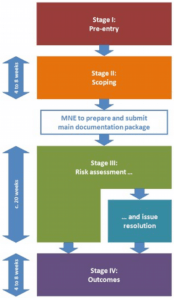
On September 16, 2019, French minister Gérald Darmanin, responsible for developing the budget and country’s transformation policy, announced that France will join eighteen other countries, including Poland, participating in the tax risk assessment program ICAP 2.0, run as part of the OECD cooperation. This program aims among others at combatting more effectively tax avoidance and tax fraud practiced by multinational corporations.


The purpose of France participation is to contribute to the improvement of France’s relations with foreign companies present on the international arena and is yet another proof of France implementing policies favoring the development of foreign trade in this country. The program consists of a series of discussions between large corporations and tax administration about tax stability and transparency. During the March meeting in Santiago, Chile, the OECD Forum no Tax Administration (FTA) decided to move to the second stage of the program – Scoping. The companies participating in the program, such as Shell International BV or Barilla, The, assess the results that have been achieved so far as very positive.


Source: OECD (2019), International Compliance Assurance Program Pilot Handbook 2.0, OECD, Paris.

Since taking up his position in 2017, Minister Darmanin has been intensively working on improving relations between taxpayers and the tax administration. He undertook to implement seven programs, including the creation of an International Tax Office whose aim would be to advise French companies developing their activities abroad on tax systems of other countries. In addition, he plans introducing simplifications for foreign companies operating in France in the tax settlement process, and the systematic publication of instructions to facilitate their understanding of this process.

A lot is being said as well about the intention of France to introduce a special tax concerning IT companies, as it has been already done in Greece, England or Italy. These changes are in line with the work of the European Union on new tax rules for e-commerce companies, which will enter into force in January 2021.

More information on the ICAP 2.0 program: OECD (2019), International Compliance Assurance Program Pilot Handbook 2.0, OECD, Paris. www.oecd.org/www.oecd.org/tax/forum-on-tax-administration/publications-and-products/international- compliance-assurance-program-pilot-handbook-2.0.htm

Iga Kurowska
Verne Legal
i.kurowska@20200224verne.fastpages.pl

Verne Legal provides a customized legal and tax advisory service to both French and foreign companies. It advises clients in running their business in France, offering strategic assistance enriched by multicultural sensitivity. For more information on the tax law in France, we invite you to download “Doing business in France” e-book and to contact our team at info@20200224verne.fastpages.pl.

Right to VAT exemption even in the event of fraudulent acts of the buyer

In the light of European law, the concept of
‘supply of goods’ outside of the EU1, known
as exportation, is objective in nature

Post title

In the light of European law, the concept of ‘supply of goods’ outside of the EU[1], known as exportation, is objective in nature and it applies without regard to the purpose or results of the transactions concerned. Therefore, when the goods leave the territory of the European Union, the company is entitled to a tax rate of 0% instead of the ordinary national rate, as it is the case of domestic deliveries, even if certain formal conditions have not been met.

Such decision was made by the Court of Justice of the European Union (CJEU) on October 17, 2019, in a case brought by the Polish company Unitel (case number C-653/18). In fact, Unitel was required to pay a 23 percent VAT, i.e. the full rate, on the sale of mobiles telephones to a Ukrainian operator. It turned out that the company that actually bought the goods was not the one indicated on the invoice. The Polish tax authority, interpreting this fact as an attempt to fraud on both Polish and Ukrainian sides, concluded that this sale did not meet the requirements of Article 2 (8) of the Goods Tax Act regarding exports. Therefore, it required the payment of full VAT (at a rate of 23%), and thus not qualifying the operation as exportation eligible of VAT exemption. The Polish tax authority also observed that Unitel had drawn up its invoices “based on data submitted by entities whose mandates were not valid or which did not possess genuine business addresses or valid documents providing proof of VAT accounting.” The case was referred to the ECJ by the Polish Supreme Administrative Court in form of a request for a preliminary ruling.

The ECJ ruled in favour of the Polish company, stating that the exporter is not responsible for the buyer’s failure to pay VAT, if he was not aware of that fact. According to the CJEU, it would be disproportionate to hold a taxable person liable for the shortfall in tax caused by fraudulent acts of third parties over which he has no influence whatsoever (in this case, the Ukrainian contractor). However, according to the CJEU, the EU law requires an operator to act in good faith and to take every step which could reasonably be asked of him to satisfy himself that the transaction which he is carrying out does not result in his participation in tax evasion. For this reason, if it were concluded that the taxable person knew or ought to have known that the transaction was part of a fraud and has not taken every step to prevent that fraud, he would have to be refused the right to be exempted from the VAT zero-rate.

By ruling in this direction, the Court questioned the practice of the Polish tax authorities and the case law of national administrative courts. According to the ECJ, the tax authorities cannot automatically demand payment of 23% VAT, which would be equivalent to requalifying the transaction as domestic sales. According to the Court, the mere fact that goods leave the customs territory of the EU qualifies an operation of exportation and as laid down in Article 146(1)(b) of the VAT Directive, makes it eligible for the exemption.

This is an important ruling for all the exporters who need be aware that in order to retain the right to the VAT exemption they have to prove that they have exercised due diligence to ensure that lawfulness of the transaction.

In 2018, the ECJ took the same position in an intra-EU case, concerning the export of goods from Slovenia to Romania. The EU court decided, on October 25, 2018, in the case of Milan Božičevič Ježovnik (case number C-528/17) that “Automatically denying a taxable importer and supplier, without regard to his diligence, the right to the exemption from import VAT in the case of fraud committed by a customer in the context of the subsequent intra-Community supply would have the effect of breaking the link between the import exemption and the exemption of the subsequent intra-Community supply”. Therefore, analogically to the judgment of 17 October 2019, a European taxpayer may be deprived of the right to a refund or deduction of VAT only if he knew or should have known that the transaction which he was conducting was part of tax fraud or tax evasion. Consequently, the obligation of due diligence concerns not only the exporters to third countries, but also those selling products within the European Union.

Iga Kurowska
Verne Legal
i.kurowska@20200224verne.fastpages.pl

[1]Unlike the export of goods from the territory of Poland to the territory of another EU country which is called intra-Community supply of goods and which is also subject to a zero rate of value added tax (VAT) but based on other regulations and slightly different rules.

Verne Legal provides a customized legal and tax advisory service to both French and foreign companies. It advises clients in running their business in France, offering strategic assistance enriched by multicultural sensitivity. For more information on the tax law in France, we invite you to download “Doing business in France” e-book and to contact our team at info@20200224verne.fastpages.pl.