

BLOCKCHAIN Y LA SIMPLIFICACIÓN DE LOS SERVICIOS JURÍDICOS PARA LAS EMPRESAS EN FRANCIA (II)

Post title

Francia está avanzando en el proceso de la digitalización del mundo empresarial con la adopción, entre otros, de la tecnología blockchain. Continuaremos arrojando luz sobre la pregunta de cómo realmente participa en el asesoramiento jurídico de las empresas.

Después de haber presentado en la primera parte la desmaterialización de los libros de las sociedades, discutimos en esta parta una segunda aplicación de la blockchain en el derecho mercantil: la protección de la propiedad intelectual (II). A continuación, publicaremos un artículo dedicado a la dataroom desmaterializada (III) y a la blockchain como el medio de prueba judicial (IV).

Blockchain en dos palabras: seguridad e inmediatez

Como se discutó en la primera parte, el blockchain es una tecnología para almacenar y transmitir información por “bloques”; transparente, segura y operando sin ningún intermediario. Permite rastrear el historial de esta información y marcarla en el tiempo. 

De hecho, es una base de datos en la que se registran transacciones o eventos agrupados por “bloques” que se suceden y cuyo histórico es resistente a cualquier modificación. Estos eventos se comparten por diferentes usuarios, sin que la información anterior se pueda eliminar o editar.

Pero, ¿por qué la tecnología blockchain es tan revolucionaria en términos de seguridad?

El sistema permite a todos de verificar y autenticar cada operación. Por lo tanto, la modificación es imposible y la cadena (la base de datos) se vuelve inmutable. 

Indudablemente, la inalterabilidad de la blockchain es muy interesante para el sector legal y en particular para la propiedad intelectual e industrial (PI). 

Blockchain y la protección de la propiedad intelectual

El uso de la blockchain para proteger la propiedad intelectual de una manera simple y rápida se está volviendo cada vez más común.  

De hecho, la carrera por el progreso tecnológico contribuye a la creación de una gran cantidad de proyectos innovadores. Cada uno es sujeto al requisito de registrar casi instantáneamente los avances en el trabajo de su desarrollo.

Sin embargo, para hacer valer sus derechos de autor, hay que demostrar la calidad de verdadero creador de la invención reivindicada, por un lado, y la precedencia de la invención en comparación con los demás, por otro lado.

El registro con el INPI de una solución innovadora no es posible para todas las invenciones y, además, puede resultar costoso, sobre todo que a menudo en esta etapa el concepto aún no ha traído beneficios.  Los medios intermedios utilizados, como el ‘sobre Soleau’, el deposito notarial o delante un agente judicial, son ineficaces o igualmente costosos, o los dos a la vez.

En este ámbito, el uso de blockchain también podría revolucionar los medios de prueba de la autoría de la invención y la fecha de su creación.

De hecho, la cadena de bloques permite obtener instantáneamente la fecha y hora de registro de una creación al anclarla en la base de datos. Por lo tanto, si adjuntamos un “hash” al texto que describe la invención o creación, tendremos una fecha determinada que puede oponerse al título de posesión personal previa.

Es una posibilidad tanto de automatizar el proceso de registro de una solución, como de obtención de una trazabilidad infalsable del conjunto de las operaciones de la vida de una invención y otras operaciones relacionadas (etapas de creación, transferencia, licencia).

El entintado en la cadena de bloques permite obtener prueba de un diseño de invención válido (como la originalidad o el país en el que se ha  comercializado por primera vez unos productos a partir del diseño registrado), su estado y su evolución. Como ejemplo, sería posible reproducir las huellas de la explotación de obras digitales, lo que es muy dificil sin la blockchain,  y necesario para desafiar ciertas explotaciones.

La tecnología blockchain ha encontrado igualmente su aplicación en la protección de los patentes. 

De hecho, cada artículo fabricado se registraría en la cadena de bloques mediante una identificación única que permite controlar la circulación del producto. Este proceso ofrece en particular la posibilidad de distinguir productos auténticos de productos falsificados, o establecer el número de copias auténticas en circulación. La tecnología blockchain participaría igualmente en el fortalecimiento de la lucha contra la falsificación o cualquier otro fraude.

El proceso de protección – seguro, simplificado y económico – fortalecería la posición de los autores e inventores que hoy en día a menudo están indefensos frente al saqueo de ideas y procedimientos. Gracias a las plataformas que ofrecen el anclaje en la cadena de bloques de varios elementos, una creación resultante de una idea se volvería verdaderamente protegible. 

Este progreso en la protección de la propiedad intelectual mediante la tecnología blockchain, que algunas personas no dudan en describir como revolucionaria, también alteraría la relación de las fuerzas económicas. De hecho, los activos intangibles son la única riqueza real de las empresas de nuevas tecnologías y, por lo tanto, la única garantía que las nuevas empresas pueden ofrecer a los inversores.  Las características de la conservación de la información en la cadena de bloques reforzarían aún más la importancia de los activos intangibles. 

La prueba así establecida sería válida tanto en el país de origen como en todas partes del mundo, como se explicará en el cuarto articulo de la serie sobre la Blockchain: Blockchain – el medio de prueba judicial.  

En el próximo artículo, se presentará una tercera aplicación que la tecnología blockchain puede tener en el campo del derecho mercantil: la dataroom desmaterializada.  

Ewa Kaluzinska                         Nicolas Renault                           Iga Kurowska
Verne Legal, Socia                Verne Legal, Abogado                 Verne Legal, Socia

Verne Legal ofrece servicios jurídicos y fiscales personalizados a las empresas españolas y extranjeras. Aconsejamos a nuestros clientes en el desarrollo de su actividad en Francia, ajustando la estrategia a la cultura empresarial francesa. Para obtener más información sobre el sistema fiscal en Francia, lo invitamos a descargar el e-book ” Guía de negocios en Francia” y contactar directamente al equipo de nuestro despacho: info@20200224verne.fastpages.pl.

Blockchain y la simplificación de los servicios jurídicos para las empresas en Francia (I)

Francia está avanzando en el proceso de
digitalización del mundo empresarial con la adopción,
entre otros, de la tecnología blockchain.

Post title

Francia está avanzando en el proceso de digitalización del mundo empresarial con la adopción, entre otros, de la tecnología blockchain. ¿Cuáles son sus repercusiones reales sobre el asesoramiento jurídico de las empresas? 

En la serie de artículos, Verne Legal presentará cuatro ejemplos de su aplicación real: la desmaterialización de los libros de las sociedades (I), la protección de la propiedad intelectual (II), la desmaterialización de las data rooms (III) y la tecnología blockchain como medio de prueba judicial (IV). 

Blockchain en dos palabras: seguridad e inmediatez 

Últimamente hemos oído mucho sobre la ‘blockchain’ y los beneficios que puede tener. Sin embargo, ¿qué es exactamente esta tecnología emergente y por qué es tan revolucionaria en términos de seguridad? 

Según la definición de Blockchain France, “Blockchain es una tecnología para almacenar y transmitir información, transparente, segura y operativa sin un órgano central de control ” [1].  

En otras palabras, es una base de datos que registra las transacciones agrupándolas en “bloques”, que rastrea su historial y que es resistente a cualquier modificación. Estos eventos, clasificados en orden cronológico, son compartidos por diferentes usuarios sin ser copiados cada vez, y sin ninguna necesidad de intermediarios. El mecanismo permite a todos verificar y autenticar cada operación que se agrega, bloque por bloque, a la cadena.

Por lo tanto, no se permiten modificaciones y la cadena, en el formato de la base de datos, se vuelve inmutable. Y todo esto, casi instantáneamente en fracciones de un segundo. 

Indudablemente, la inalterabilidad de la blockchain es muy interesante para el sector legal. 

Pero en práctica, ¿cómo la aplicación de la tecnología blockchain podría mejorar el asesoramiento jurídico de las PYMES, las empresas de mediana capitalización o los grupos internacionales? 

En este artículo presentaremos el primer ejemplo del posible uso de blockchain en el servicio de asesoramiento legal empresarial: desmaterialización de los libros registros mercantiles. 

Blockchain y la desmaterialización de los libros de las sociedades

Desde 2017, la legislación francesa ha ido abriendo gradualmente la posibilidad de desmaterializar los libros obligatorios que tienen que llevar las sociedades de todos tipos. Al hablar de los libros registros, nos referimos a cualquier registro relacionado con la vida de la empresa, como los registros de movimientos de acciones, los registros obligatorios de varios órganos decisivos de la empresa (como el Consejo de Administración) o el registro oficial de los empleados (obligatorio para cualquiera sociedad francesa que tenga empleados). 

En primer lugar, Francia ha legalizado el uso de la blockchain para los registros de emisión y/o de venta de valores financieros, como las acciones de la empresa (empresas no cotizadas). Desde entonces, un registro de movimientos de valores de una empresa, que se llevaba hasta entonces obligatoriamente en papel, podría ser desmaterializado. Por lo tanto, gracias a la tecnología blockchain, los registros podrían coger una forma digital incomparablemente más segura.  

Dicha titulización de los registros y la simplificación de su mantenimiento representan un avance considerable para las PYMEs, e especialmente para los startups.

De hecho, una acción de registro del libro registro constituye una prueba de una participación accionaria en una sociedad anónima, como la “SAS” francesa. El mantenimiento de registros es, de hecho, una obligación inscrita en el Código de Comercio francés (Code du commerce) [2] y en el Código Monetario y Financiero francés (Code monétaire et financier) [3].  Los tribunales mercantiles franceses recuerdan regularmente que la producción de una orden única para el movimiento de valores no es suficiente para presumir la propiedad legítima de las acciones [4]. Por lo tanto, con la transacción anclada en la cadena de bloques, las inversiones en empresas francesas son perfectamente seguras. 

La desmaterialización de los registros mercantiles a través de la tecnología blockchain también puede asegurar a los inversores más pequeños: se acabó el riesgo de que su inversión en el capital de start’ups de rápido crecimiento, a continuación de otra ronda urgente de recaudación de fondos, se ahogue o incluso se pierda (¡sí, eso sucede!). 

La última etapa de la desmaterialización de los registros en Francia se completó en noviembre de 2019, con la desmaterialización de los registros de procedimientos. Ahora, la mayoría de los registros mercantiles y otros libros que necesitan de ser registrados pueden llevarse en forma digital. 

Por lo tanto, actualmente, las empresas francesas pueden establecer y almacenar los siguientes documentos mercantiles en formato electrónico:

  • las actas de las asambleas y las consultas escritas de los socios (o del socio único, cuando esté autorizado) de una sociedad anónima simplificada (SAS), una sociedad anónima (SA), una sociedad de responsabilidad limitada (SARL), una sociedad en nombre colectivo (SNC) ), y sociedades en comandita simple (SCS) o limitada por acciones, así como el registro en el que están consignados; 
  • los registros de asistencia a las reuniones del órgano rector, por ejemplo, el Consejo de Administración y el consejo de supervisión de una empresa SA, su Presidente, etc., así como las actas de las deliberaciones de estos órganos y el registro en el que se mantienen; 
  • los registros de las decisiones colectivas de los socios de las sociedades civiles (por ejemplo, las empresas que poseen propiedades inmobiliarias como SCI), así como las actas de las asambleas y consultas escritas de los socios que se mantienen allí, y la mención de las decisiones de los socios resultantes de un acto relacionado con este registro.


Los documentos subidos y guardados en el registro desmaterializado pueden tener el formato electrónico, es decir, autenticarse mediante una firma electrónica.   

Para cumplir con las obligaciones legales, la firma electrónica de documentos, cuando están redactados o certificados, debe cumplir al menos con los requisitos de la firma electrónica avanzada (a diferencia de la firma “simple” o “calificada”), según lo dispuesto en el artículo 26 del reglamento francés conocido como “eIDAS”.

Estos últimos avanzos demuestran que Francia está tratando de desmaterializar, en la medida de lo posible, los registros y los documentos conservados por las empresas francesas. 

En el próximo artículo presentaremos la segunda aplicación de blockchain en el asesoramiento jurídico empresarial: Blockchain y la protección de la propiedad intelectual.

Ewa Kaluzinska                         Nicolas Renault                           Iga Kurowska
Verne Legal, Socia                Verne Legal, Abogado                 Verne Legal, Socia

Verne Legal ofrece servicios jurídicos y fiscales personalizados a las empresas españolas y extranjeras. Aconsejamos a nuestros clientes en el desarrollo de su actividad en Francia, ajustando la estrategia a la cultura empresarial francesa. Para obtener más información sobre el sistema fiscal en Francia, lo invitamos a descargar el e-book ” Guía de negocios en Francia” y contactar directamente al equipo de nuestro despacho: info@20200224verne.fastpages.pl.

[1] https://blockchainfrance.net/decouvre-la-blockchain/c- is-what-the-blockchain/
[2] 
Artículo L. 228-1 del Código de Comercio francés
[3] Artículos L 211-16 y L 211-17 del Código Monetario y Financiero francés
[4] Tribunal de Apelaciones de París, 11 de Enero ,2018  (n°16/10056)

PRIVACY AND COOKIES POLICY

PRIVACY AND COOKIES POLICY

1. GENERAL INFORMATION

According to the requirements of the General Data Protection Regulation (GDPR) that entered into force on May 25, 2018, Verne Legal SARL, with its registered office at 418, rue du Mas de Verchant – BP 12 – 34935 Montpellier Cedex 9, in France (hereinafter “VL”) would like to provide some details concerning the personal data processing by VL.

Our goal is to provide a complete, clear and transparent information to each Website visitor (hereinafter the “User”) on how he/she can assure the effective protection of his/her private sphere of life. Therefore, VL shares all information regarding this protection in this Privacy and Cookies Policy. In all matters concerning the processing of personal data and cookies, please contact us at info@20200224verne.fastpages.pl.

2. COLLECTED INFORMATION

When using the Website, User data is automatically collected. These data include IP address, domain name, browser type and version, operating system and language. These data can be collected by cookies, Google Analytics and the Web Beacon system, and can be saved in server logs.

The personal data provided by the Users on the Website is voluntary. They are defined as any information relating to an identified or identifiable natural person who can be identified, directly or indirectly, in particular by reference to an identifier such as a name, an identification number, location data, an online identifier or to one or more factors specific to the physical, physiological, genetic, mental, economic, cultural or social identity of that natural person.

3. DATA CONTROLLER

Verne Legal law firm acts as the data controller.
In order to contact the controller, please send an e-mail to info@20200224verne.fastpages.pl or contact us in writing, sending your request/question to the following address:
Ewa Kaluzinska
Verne Legal
418, rue du Mas de Verchant – BP 12 – 34935
Montpellier Cedex 9, France
Email: info@20200224verne.fastpages.pl
Tel: +48 22 427 87 10

4. PERSONAL DATA
4.1. Data processing carried out by VL

As a result of browsing the Website, the Administrator collects and processes personal data in accordance with the relevant provisions, including in particular the GDPR (Regulation (EU) 2016/679 of the European Parliament and of the Council of 27 April 2016 on the protection of natural persons with regard to the processing of personal data and on the free movement of such data, and repealing Directive 95 /46/EC), and the rules for their processing contained therein.

The Controller ensures the transparency of data processing, in particular, by always informing the User about the processing of data at the time of data collection, its purpose and the legal grounds. The Controller ensures that the data is collected only to the extent necessary for the indicated purpose and only for as long as the processing is necessary.
When processing of Users’ data, the Administrator ensures their security and confidentiality. It guarantees the access to data to the Users concerned. If, despite the security measures, there has been a violation of personal data protection (e.g. “leakage” of data or their loss), the Controller shall inform the Users about such event in a manner conform with the provisions.

As part of its activities, VL collects and processes personal data based on:
Art. 6. 1 f) GDPR – processing is necessary for the purposes of the legitimate interests pursued by the controller (namely VL): to provide services to their clients, for marketing of VL services, including to inform about events organized by VL or in which VL participates and about other VL activities, as well as for analytical, statistical purposes, as well as to ensure 20200224verne.fastpages.pl website cybersecurity;
Art. 6. 1 c) and art. 6.1 a) GDPR – to recruit people interested in working or cooperating with VL;
Art. 6.1 c) GDPR– processing is necessary for compliance with a legal obligation to which the controller is subject;

Therefore, the User’s data are processed mainly, but not exclusively, to present LV services, handle the queries from the contact form, send an e-book and a company newsletter, as well as in case of recruitment procedures.

4.2. Data recipients

The recipients of User’s personal data may be appropriately authorized employees and associates of VL, as well as, depending on the situation, external processing entities, including in particular the IT suppliers (hosting). They provide us with a hosting service and diverse systems of online marketing, both for sending emails and analysing website traffic. The list of suppliers is given in art. 2 of this Privacy and Cookies Policy.
We use suppliers who do not act solely on our demand and will determine the purposes and ways of using the User’s personal data themselves. They provide advertising campaign services for us. Our suppliers are based mainly in Poland and other countries of the European Economic Area (EEA). We make sure that our suppliers guarantee a high level of personal data protection.
Also, VL may disclose Users’ Data, if requested, to an authorized state authority.

4.3. Storage and processing duration

The duration of data processing and storage depends on the type of service provided and the purpose of the processing. The data processing period may also result from legal provisions. In the case of data processing on the basis of the Administrator’s legitimate interest – e.g. for security reasons – the data are processed for a period of time enabling the implementation of this interest or to enable an effective objection to data processing. If the processing is based on consent, the data is processed until it is withdrawn. When the basis for processing is necessary to conclude and execute the contract obligations, the data is processed until its termination.
The data processing period may be extended if it is necessary to establish and assert claims or queries or elaborate a defence against them. After that time, it will only be processed in the event and to the extent required by law. After the storage duration, backup copies are permanently destroyed or anonymised.

4.4. Rights of persons affected

The User is any natural person visiting the website www.20200224verne.fastpages.pl, whose personal data is collected by the Website and processed by the Controller.
The User is also a person using VL IT applications (chatbox), a person visiting our social media and using social media plugins and tools, as well as an individual conducting e-mail correspondence with VL or applying for a job with VL.
According to recital 39 and art. 13, all natural persons should be made aware of risks, rules, safeguards and rights in relation to the processing of personal data and how to exercise their rights in relation to such processing. Namely, VL enables Users the exercise the following rights:

    • right to be informed about the processing of personal data – in response to the request from the User, the Controller provides information about data processing, including but not limited to the purposes and legal grounds for processing, the scope of data stored, entities to which it is disclosed, and the planned date of deletion of data;
    • right to obtain a copy of User’s data – the Controller provides a copy of the processed data regarding the person submitting the request;
    • right to rectification – the Controller is obliged to remove or correct any inaccuracies or errors of personal data processed and supplement them if they are incomplete;
    • right to deletion – according to art. 17 GDPR, the User can request that the Controller deletes the data, provided the legal requirements have been met. This can be the case if the data are no longer required for the purposes for which they were acquired or otherwise processed.
    • right to restriction of processing – in the event of such request, and provided the legal requirements have been met, the Controller ceases to perform operations on personal data concerned by the restriction and their storage, in accordance with accepted retention rules or until the reasons for limiting data processing cease to exist (e.g. a decision of the supervisory authority allowing further processing of data will be issued);
    • right to data transferability – at User’s request, VL can transfer your data – where technically possible – to another responsible entity. However, this right only applies if the data processing is based on User’s consent or is required to fulfil a contract. It is also possible to request that the data be sent to another entity – however, provided that there are technical possibilities in this regard both on the part of the Controller and that other entity;
    • right to objection to the processing of data for marketing purposes – the User may, at any time, object to the processing of his/her personal data for marketing purposes, without the need to justify such a demand;
    • right to objection to other purposes of data processing – the User may, at any time, object to the processing of personal data based on VL legitimate interest or the User’s consent (e.g. for analytical or statistical purposes or for reasons related to the protection of property); such request must be motivated by the User. In this case, VL will no longer process your data. The latter does not apply if VL is able to prove there are compelling, defensible reasons for the processing that outweigh your interests or we require your data to assert, exercise or defend against legal claims.
    • right to withdraw consent – if the data are processed on the basis of expressed consent, the User has the right to withdraw it at any time. However, it does not affect the lawfulness of the processing carried out before the consent is withdrawn.;
    • right to lodge a complaint – if processing of personal data violates the provisions of the GDPR or other provisions regarding the personal data protection, the User may lodge a complaint with the Commission nationale de l’informatique et des libertés “CNIL” (CNIL, 3 Place de Fontenoy, 75007 Paris).

In order to exercise the above rights, please contact the data Controller using the contact details indicated above. The abovementioned requests can by sent by e-mail to info@20200224verne.fastpages.pl, or by post to the address of Verne Legal provided in point nr.3.

4.5. Recruiting

As part of the recruitment processes, the Controller expects to be provided personal data (e.g. in a CV, CV or cover letter) only to the extent required by the applicable labour law. Therefore, no additional information should be provided. If the submitted applications contain additional data, they will not be used or included in the recruitment process.

5. COOKIES

Like most websites, Verne Legal uses cookies to help visitors use the website and to create anonymous statistics.

5.1. Definition

The concept of cookies should be understood in a broad sense. It includes IT data, in particular all markers used and / or read while browsing the Website, regardless of the type of device used (e.g. computer or smartphone).

Cookies make the website environment more suited to the needs of the User by:

      • Keeping preferences, so you don’t have to enter them every time you visit the Website,
      • Assessment of the Website usage and related needs, and then adapting the Website to the User’s expectations.

Our cookies are designed to improve the functioning of the Website from the User’s perspective.

They enable managing and / or deleting selected files. However, we would like to draw Users’ attention to the fact that blocking or limiting the use of cookies may affect some of the functionalities of the Websites and prevent the User from fully experiencing the services offered by the Website.

Cookies will not be used to collect personal data on the user’s hard drive, read e-mail addresses, or to obtain private information.

5.2. Cookie Settings

The User has a possibility to manage VL Website Cookies settings. He/she can disable them or limit them at any time, by changing the Web browser settings. The use of the Cookie settings varies on the browser. More information on how to change the cookie settings can be found in the browser’s help menu.

5.3. Use of cookies

This VL site uses cookies in many locations. Due to the lack of functions such as creating an account, a log in, commenting or shopping via WooCommerce, the Website does not use WordPress cookies.
However, the Website automatically collects User data and uses cookies for technical, marketing and analytical purposes. More precisely, this applies to cookies essential for the Site and acceptance of its use (so-called technical cookies), functionality cookies, statistics cookies, as well as marketing cookies (social media cookies included).

Please find below the list of cookies collected, as well as details concerning the reasons for their using and the time of their storage.

Technical cookies (cookies essential for the site)

Cookie name Purpose Expiration
eZSESSID This cookie is used by our content management system and is added when you visit the Site. It is essential for the functioning of the Website. It enables the user to navigate on the website and use Site functionalities. Session

Remembering information about VL Cookies Policy

During the User’s first visit, a Cookies notification message will appear, providing the User with the basic information on the use of cookies and asking for the acceptance. By clicking the “Accept” button, cookies will be saved, which will enable the User’s computer to receive the confirmation of reading the Cookie policy, to remember it and thus not to display it during the next visit.

Cookie name Purpose Expiration
VernelegalAcceptCookies It stores cookies to inform us that the User have seen and accepted our Cookie notification message. 12 months

Estimating and assessing the use of the website
We use Google Analytics to collect information about the use of the website and to better understand Users’ expectations. It enables us to constantly improve our Website.
Google Analytics stores information about websites visited by the User, the amount of time spent on them, etc. We do not collect or store any personal information, such as name or address, so this cookie cannot be used to identify you as a User. We do not allow Google to use or share the data of people who viewed our site to third parties.
You can opt out of Google Analytics cookies by visiting this page on Google.

Cookie name Purpose Expiration
_utma This randomly generated number is used to determine the number of unique Users on our Site. 13 months
_utmb This randomly generated number along with _utmc is used to calculate the average amount of time Users spend on our site. 30 minutes
_utmc Randomly generated number used (with _utmb) to calculate when you close your browser. Session
_utmz Randomly generated number and information about how the User accessed the Website (for example, via a direct link, by searching or paid search). 6 months
_jsuid This “cookie” stores a random number that is generated when you first visit the site. Its purpose is to identify new website Users. 13 months
_eventqueue This “cookie” stores a mapping of mouse movements that can be registered on our servers only when the current page is turned off. These offsets can not be processed until the next page is loaded. 1 hour
heatmaps_g2g_100626449 Thanks to this cookie we can order Google to record clicks on the page on the basis of which the heat map is created (record of website locations that the user watches and its duration). 1 hour
_first_pageview Session cookies set during the first preview of the Site at each visit. Its purpose is to check that certain parts of the code turn on at the first view of the page, speeding up its operation and improving efficiency. 10 minutes
_referrer_og This cookie stores user external credentials. 90 days

Cookies used for marketing purposes and on social networks
Hotjar

Cookie name Purpose Expiration
hjDonePolls Hotjar uses cookies and other technologies to collect data about the behaviour of Users and their devices (in particular the device’s IP address (captured and stored only in anonymous form), device screen size, device type (unique device identifiers), browser information, geographical location (country only), preferred language (used to display our website), click maps or other static charts, but also session recordings. Hotjar stores this information in a pseudonymous User profile. Neither Hotjar nor VL will ever use this information to identify individual users or to match them with further User’s data: https://www.hotjar.com/legal/policies/privacy 12 months
hjIncludeInSample Session

Double click

Cookie name Purpose Expiration
DSID – Double Click We use tools for advertising and re-marketing purposes. For this purpose, Google cookies are used for DoubleClick services (DoubleClick Campaign Manager, Doubleclick Bid Manager, DoubleClick Search, DoubleClick Floodlight). External suppliers install the appropriate code or pixel to download information about the User’s activity on the Services and then, on this basis, the User who visited our Services displays our ads on other websites belonging to the advertising network of our external suppliers (so-called remarketing), collects information about the campaig 15 days
IDE – Double Click 380 days

Social media

Cookie name Purpose Expiration
leo_auth_token These LinkedIn cookies are activated by the LinkedIn share button. They enable tracking of websites visited by the User. For more information, visit the LinkedIn page: https://www.linkedin.com/legal/privacy-policy 1 hour
L1e
metrics_token These are Twitter cookies. They are used by Twitter to provide embedded content that is displayed in the site. More information: https://help.twitter.com/en/rules-and-policies/twitter-cookies 1 hour
tfw_exp
6. HYPERLINKS TO OTHER WEBSITES

This Privacy and Cookies Policy applies exclusively to the VL Website.
As for other hyperlinks referring the User to other websites that are posted on the VL Website, VL disclaims all responsibility for the privacy practices of those websites. After entering the websites of other entities, we recommend that you read the Privacy Policy and Cookie Policy set out there.

7. CHANGES TO THE VERNE LEGAL PRIVACY AND COOKIES POLICY

From time to time, VL will update this Privacy and Cookie Policy to reflect changes in our practices and services. If we introduce changes to the content of this Privacy and Cookies Policy, we will change the “last updated date” at the bottom of the document. We recommend checking the content of this page on regular basis to be aware of the changes in the content of this document.

8. FINAL PROVISIONS

his Privacy and Cookies policy shall be governed by and construed in accordance with French law, in consideration with specific ethical and deontological rules. Any disputes that may arise from the relations covered by this policy are to be held, in case of inability to encounter an amiable solution, before the French Court territorially competent for the registered office of VERNE LEGAL.

Updated on November 8th, 2019
***

Descargue el e-book

doing business in france

E-book form-sp

* Campos requeridos

GENERAL TERMS OF USE THE “20200224verne.fastpages.pl” WEBSITE

GENERAL TERMS OF USE
THE “20200224verne.fastpages.pl” WEBSITE

Article 1: Subject

These General Terms of Use apply to all the content published by the 20200224verne.fastpages.pl website (hereinafter the “20200224verne.fastpages.pl website” or “Site”), such as materials or articles.
By using this Site, the visitor (hereinafter “the User”) is agreeing to be bound by the following General Terms of Use.
These Terms of Use can be modified or updated at any time. Therefore, the User is encouraged to visit the Site and regularly read the conditions.

Article 2: Legal Disclaimer
  • This Site was published by:
    Verne Legal SARL company, with a share capital of 3,000 €
    SIRET Number: 84846592800010, RCS Montpellier n ° 848465928
    Address: 418, rue du Mas de Verchant – BP 12 – 34935 Montpellier Cedex 9, France (hereinafter “VERNE LEGAL”).
  • VERNE LEGAL is a law firm registered upon the Bar Association of Montpellier, France.
    Attorney at Law (fr. avocat) Ewa Kaluzinska is also on the list of foreign lawyers of the Bar Association of Warsaw, Poland.
  • Publication director: Ewa Kaluzinska
  • Contact: info@20200224verne.fastpages.pl
    Phone numbers: +33 430 050 90
    +48 22 427 87 10
  • Hosting
    PLUM – Web Solutions Sp. z o.o., z siedzibą w Warszawie, przy ul. Wiśniowej 48/16, 02-520 Warszawa zarejestrowaną w Krajowym Rejestrze Sądowym prowadzonym przez Sąd Rejonowy dla m. st. Warszawy w Warszawie, XIII Wydział Gospodarczy Krajowego Rejestru Sądowego pod numerem KRS: 0000373171 posiadającą REGON: 142729640;
  • Service provider of direct and permanent data storage:
    Zennox sp z oo, Dąbrowskiego 7, 42200 Częstochowa, Poland
    KRS n ° 0000414281 DISTRICT COURT IN CZĘSTOCHOWA, XVII ECONOMIC DEPARTMENT OF THE NATIONAL COURT REGISTER;
    “REGON” number 242888558.
Article 3: Access to the website

The 20200224verne.fastpages.pl Website provides access to information on legal services provided by the VERNE LEGAL law firm, events organized by VERNE LEGAL, and information regarding VERNE LEGAL.

It also contains general information and law review, in particular in the field of commercial law, tax law and IT law.

The Site offers an ebook “Doing Business in France”, available upon request, and an option to contact VERNE LEGAL vía the contact form.

The 20200224verne.fastpages.pl Website also provides interactive tools of communication between the Website Users and the lawyers, as well as the legal ChatBot (conversation robot) that answers simple questions.

The Information and materials published on the Website shall under no circumstances be considered as legal opinions or consultations. The use of publications on the Site cannot replace individual consultation with a lawyer. Only an individual consultation can provide a solution responding to Users’ situation, as it depends on their needs and personal situation.

All information published on the Website is provided for information purposes only and is subject to change at any time without prior notice to Users.

The Site is available free of charge no matter the place, for every User with an Internet access. All costs incurred by the User in order to access the service (hardware, software, Internet connection, etc.) are covered solely by the User.

For technical or other reasons, access to the Site may be interrupted or suspended by the publisher without notice or justification.

The Site uses the WordPress CMS system and technologies such as MySQL, PHP, Javascript, CSS and HTML. By all possible means it ensure the best quality of the service. Nevertheless, VERNE LEGAL is under no obligation to achieve results.

VERNE LEGAL is not liable for any material damage related to the use of the 20200224verne.fastpages.pl Website. In addition, the Website User undertakes to access the Website using the latest virus-free devices and using an updated, modern Web browser.

Any event caused by force majeure, causing the network or server to malfunction, shall not be a liability of VERNE LEGAL.

Article 4: Use of contact forms

The User declares that all information provided while sending a question or requesting an e-book are in line with reality, and apply only to his person or legal entity, which he/she legally represents or for which he/she has the required power of attorney, as for the transfer of data.

Article 5: Protection of intellectual property

All elements posted on the 20200224verne.fastpages.pl Website and all content on the Website (characters, designs, logos, texts, images, graphics, icons, sounds, applications, programs, etc.) are the sole property of VERNE LEGAL, with the exception of photos and graphics belonging to third parties, which are of a free use. They are protected by the Intellectual Property Code and international agreements, particularly by copyright and trademark protection.

Complete or partial reproduction, copying, processing, modification of the content or publications or graphic elements, as well as the representation of this Site is strictly prohibited.

Pursuant to the provisions of the Code of Intellectual Property, it is reminded that a User who quotes, cites, reproduces or publishes protected content is obliged to refer to the author and the source of the publication.

The User undertakes to use the 20200224verne.fastpages.pl Website for personal purposes and in accordance with the principles of law and internet practices. Any use for commercial and advertising purposes is strictly prohibited.

Article 6: Personal data

VERNE LEGAL may collect personal data of the Users through the Website.
The data administrator is VERNE LEGAL, whose legal information is given in Article 2 of this document.

Data collected via the Website is processed in accordance with applicable regulations.

Data processed by VERNE LEGAL is data that the User voluntarily provides through various forms of data collection on the Site (contact form, e-book request form). VERNE LEGAL also processes data resulting from cookies (see our Cookies Policy). These data is necessary for VERNE LEGAL to be able to respond to the User’s requests and / or offer him an appropriate service, as well as the proper management of potential customer relationships.

VERNE LEGAL does not process any sensitive data and undertakes to ensure data security by implementing technical and organizational measures.

In accordance with applicable regulations, the User has the right to access, rectify, and in the event of justified reasons, delete, limit and oppose the processing of the data. The User also has the right to transfer his/her data and the right to withdraw his/her consent to the processing of the data. Users may exercise these rights or ask questions concerning the processing of their data by contacting info@20200224verne.fastpages.pl.

For more information on managing personal data, you can read our Privacy Policy.

Article 7: Disclaimer

The information presented on this Site is provided for informational purposes only. It does not constitute a customised legal advice which must be adjusted to individual situations.

In addition, while every effort has been made to offer current and accurate information, errors and omissions can occur. All content on the Site and all services provided through it are provided “as is”, with no guarantees of completeness, accuracy or timeliness, and without representations, warranties or other contractual terms of any kind, express or implied. VERNE LEGAL disclaims all liability to the User and everyone else in respect of the content on this Site and all services provided through it. It does not represent or warrant that this Site is accurate, current, uninterrupted, error-free, omission-free or free of viruses or other harmful components. VERNE LEGAL is not liable for any errors, omissions or inaccuracies caused, inter alia, by changes in laws and regulations, or by other reasons.

VERNE LEGAL is not responsible for any misinterpretation or use of information published on the Site and for any damage caused by such misinterpretation.

VERNE LEGAL cannot be held responsible for direct or indirect damage caused to the User’s equipment while accessing the Website, resulting either from the use of equipment that does not meet the requirements indicated above, or from the appearance of an error or non-compliance.

VERNE LEGAL is not liable for indirect damages (such as market loss or chances of receiving market share) resulting from using the Website.

VERNE LEGAL shall not be liable in the event of force majeure or unpredictable and insurmountable third-party action.

Article 8: Hypertext links

The site may contain hypertext links.

Users are advised that clicking on these links will cause quitting the 20200224verne.fastpages.pl Website.

VERNE LEGAL has no control over the websites from the hyperlinks and cannot under any circumstances be liable for their content or for any damages that could result from visiting these pages or the interpretation of the publications they contain.

VERNE LEGAL cannot be held responsible for any viruses or other harmful types of software that may be downloaded by the User’s computer equipment while using the Website.

Article 9: Contract Law

These General Terms of use are governed by French law, including its conclusion, validity, implementation, effects or termination.

Article 10: Dispute Resolution

Any disputes that may arise from the relationship covered by the General Terms of use shall be settled by the French court, competent for the registered office of VERNE LEGAL and in accordance with the rules of deontology of the profession of lawyer in France.

If you have any questions about the application of these General Terms of Use, you may contact VERNE LEGAL, whose contact details are provided in Article 2.

The General Terms of Use were updated on October 1, 2019.
***

Francia, un nuevo miembro del Programa de evaluación multilateral de riesgos fiscales ICAP 2.0

El 16 de septiembre 2019, el ministro francés
Gérald Darmanin anunció que Francia se unirá
a otros dieciocho países, España incluida, al ICAP 2.0

Post title

El 16 de septiembre 2019, el ministro francés Gérald Darmanin, responsable del desarrollo del presupuesto y la política de transformación del país, anunció que Francia se unirá a otros dieciocho países, España incluida, al ICAP 2.0 (“International Compliance Assurance Program”), realizado en el marco de la cooperación de la Organización para la Cooperación y el Desarrollo Económico (“OCDE”). El programa tiene por finalidad, entre otros, incrementar la eficiencia, eficacia y equidad de la Administración Pública y combatir las prácticas de evasión tributaria por parte de grandes grupos multinacionales.
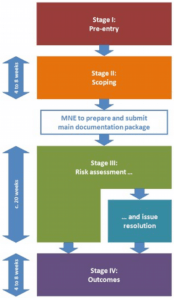

A través de su participación, Francia busca a mejorar las relaciones de su Administración tributaria con empresas extranjeras cuales desarrollan su actividad en su territorio, y es una prueba más de que Francia está implementando políticas que favorecen el desarrollo de su comercio exterior. El programa se basa en intercambios entre las administraciones y los grupos multinacionales acerca de los potenciales riesgos fiscales identificados en las áreas objeto de análisis, la seguridad y la transparencia fiscal. Durante la reunión de marzo en Santiago, Chile, el Foro sobre la Administración Tributaria (FAT) de la OCDE decidió pasar a la segunda etapa del programa: Scoping, en la cual las administraciones participantes llevarán a cabo un análisis de la información proporcionada con el objetivo de determinar los potenciales riesgos que puedan derivarse de las políticas fiscales de cada grupo. Las empresas participantes en el programa, como Shell International BV o Barilla, evalúan los resultados logrados hasta ahora como muy positivos.


Fuente: OECD (2019), International Compliance Assurance Programme Pilot Handbook 2.0, OECD, Paris.

El ministro francés Darmanin, desde que asumió su cargo en 2017, está trabajando intensamente para mejorar los servicios a los contribuyentes y reducir los costes derivados del cumplimiento de las obligaciones tributarias. Dentro de las acciones, se comprometió a crear una Oficina de Impuestos Internacionales destinada a asesorar a las empresas francesas sobre cuestiones fiscales de las distintas jurisdicciones en las cuales desarrollan su actividad. Además, también prometió a las empresas extranjeras que operan en Francia una simplificación del proceso de liquidación de impuestos y unas publicaciones sistemáticas de instrucciones para facilitar su comprensión de este proceso.

Uno de los temas corrientes es la introducción en Francia del impuesto digital, que ahora mismo está sometido a consulta pública hasta el 29 de noviembre. La nueva ley francesa se enmarca en el trabajo de la Unión Europea sobre un régimen tributario para las tecnológicas. Las compañías del comercio electrónico también están afectadas por los cambios de IVA, que entrarían en vigor en enero 2021.

Más información sobre el programa ICAP 2.0: OECD (2019), International Compliance Assurance Programme Pilot Handbook 2.0, OECD, Paris. www.oecd.org/www.oecd.org/tax/forum-on-tax-administration/publications-and-products/international-compliance-assurance-programme-pilot-handbook-2.0.htm

Iga Kurowska
Verne Legal
i.kurowska@20200224verne.fastpages.pl

Verne Legal ofrece servicios jurídicos y fiscales personalizados a las empresas españolas y extranjeras. Aconsejamos a nuestros clientes en el desarrollo de su actividad en Francia, ajustando la estrategia a la cultura empresarial francesa. Para obtener más información sobre el sistema fiscal en Francia, lo invitamos a descargar el e-book “Guía de negocios en Francia” y contactar directamente al equipo de nuestro despacho: info@20200224verne.fastpages.pl.

Retención del derecho a la exención del IVA incluso en el caso de fraude por la parte del comprador

A la luz de la legislación europea, el concepto
de “exportaciones de bienes” fuera de la Unión Europea,
denominado exportación, tiene carácter objetivo

Post title

A la luz de la legislación europea, el concepto de “exportaciones de bienes” fuera de la Unión Europea, denominado exportación[1], tiene carácter objetivo y se aplica con independencia de los fines y los resultados de las operaciones de que se trate. Por lo tanto, cuando los bienes salen del territorio de la Unión Europea, la empresa tiene derecho a exención del IVA, incluso en los casos en que no se cumplan ciertas condiciones formales.

Dicha decisión fue pronunciada por el Tribunal de Justicia de la Unión Europea (TJUE) el 17 de octubre de 2019, en el asunto de una empresa polaca Unitel (número del asunto C 653/18). El litigio nació después de la petición recibida por Unitel de pagar el IVA de 23 % (el tipo impositivo de entregas nacionales) por la venta de teléfonos móviles a una empresa ucraniana. Resultó que la empresa que realmente adquirió los productos no era la misma aquella indicada en la factura. Las autoridades tributarias polacas, interpretando este hecho como una tentativa de un fraude fiscal respecto de las autoridades fiscales tanto polacas como ucranianas, concluyó que la venta no cumplía los requisitos del artículo 2, punto 8, de la Ley del IVA con respecto a las exportaciones.

Por lo tanto, exigieron el pago del IVA total (el tipo impositivo del 23%), cuestionando la clasificación de la operación como exportación. En su opinión, Unitel había emitido sus facturas basándose en datos presentados por entidades cuyos mandatos no eran válidos o que no tenían direcciones profesionales reales o documentos válidos que justificaran el tratamiento a efectos del IVA. El asunto fue remitido por el Tribunal de lo Contencioso-Administrativo del Voivodato de Varsovia al Tribunal europeo mediante una cuestión prejudicial.

El TJUE responde en favor de la empresa polaca, declarando que el exportador europeo no es responsable de la pérdida de ingresos fiscales causada por actos fraudulentos de terceros (en este caso, el contratista ucraniano) en los que él no tuvo ninguna participación. Por lo siguiente, según el TJUE, sería desproporcionado denegarle la exención del IVA. Sin embargo, añadan los jueces del TJUE, no es contrario al Derecho de la Unión obligar a un operador a que actúe de buena fe y a que adopte toda medida razonablemente exigible para asegurarse de que la operación que efectúa no le conduce a participar en un fraude fiscal. Por esta razón, si el proveedor sabía o hubiera debido saber que la operación que realizó estaba implicada en un fraude cometido por el adquirente y no adoptó todas las medidas razonables a su alcance para evitar tal fraude, es proporcionar de denegarle el derecho a la exención.

Al pronunciarse en este sentido, el Tribunal cuestionó la práctica de las autoridades tributarias polacas y la jurisprudencia de los tribunales polacos de lo contencioso-administrativo. Según el TJUE, las autoridades fiscales no pueden exigir automáticamente el pago del 23% de IVA, cualificando indirectamente la transacción de una entrega que tributa al tipo nacional. En la opinión del Tribunal, el mero hecho de que los bienes abandonan físicamente el territorio de la Unión califica la operación de una exportación de bienes y impone aplicación del tipo del 0 %.

Se trata de una decisión importante para los exportadores de productos que deben tomar en cuenta que, para retener su derecho a exención de IVA, deberán probar que han demostrado diligencia debida a un proveedor extranjero asegurándose de que la transacción se haya llevado a cabo legalmente.

¿Cuál sería la decisión del TJUE en cuanto a la entrega intracomunitaria de bienes, por ejemplo, entre España y Francia? Ciertamente la misma.

En 2018, el TJUE tomó la misma posición en un caso de operación dentro de la UE, específicamente pronunciándose sobre una entrega desde Eslovenia a Rumania. En la sentencia Milan Božičevič Ježovnik (número del asunto C-528/17) emitida el 25 de octubre de 2018, el Tribunal de la UE decidió que “denegar automáticamente a un sujeto pasivo importador y proveedor, sin tener en cuenta si ha actuado con diligencia, el derecho a la exención del IVA a la importación en el supuesto de que el comprador haya cometido fraude en el ámbito de la ulterior entrega intracomunitaria implicaría la ruptura del vínculo entre la exención a la importación y la exención de la ulterior entrega intracomunitaria”. De lo anterior se desprende que, analógicamente a la sentencia del 17 de octubre de 2019, un contribuyente de la UE puede ser privado del derecho a un reembolso o deducción del IVA solo si sabía o hubiera debido saber que las operaciones estaban implicadas en un fraude cometido por el adquirente y de que no adoptó todas las medidas razonables a su alcance para evitar tal fraude. La obligación de adoptar las medidas necesarias para regularizar la situación, y hacer todo lo posible para garantizar que las transacciones no impliquen ningún tipo de fraude fiscal, por lo tanto, se aplica no solo a los exportadores a países fuera de la UE, sino también a aquellos que venden productos dentro de la Unión Europea, por ejemplo, de España a Francia.

Iga Kurowska
Verne Legal
i.kurowska@20200224verne.fastpages.pl

[1] A diferencia de la exportación de bienes desde el territorio de Polonia al territorio de otro país de la UE, que se denomina entrega intracomunitaria de bienes y que también está sujeto a IVA de 0%, pero se basa en otras regulaciones y reglas ligeramente diferentes.

Verne Legal ofrece servicios jurídicos y fiscales personalizados a las empresas españolas y extranjeras. Aconsejamos a nuestros clientes en el desarrollo de su actividad en Francia, ajustando la estrategia a la cultura empresarial francesa. Para obtener más información sobre el sistema fiscal en Francia, lo invitamos a descargar el e-book “Guía de negocios en Francia” y contactar directamente al equipo de nuestro despacho: info@20200224verne.fastpages.pl.